Shopify Review App Comparison: How to Choose the Right Workflow
Shopify Review App Comparison: How to Choose the Right Workflow — a practical guide for ecommerce stores. Learn how to build a more effective review collection process with better timing, messaging, and workflow.
Quick answer
A Shopify review app comparison helps store owners evaluate which review workflow tool fits their specific operational needs. This comparison focuses on collection workflows, timing controls, compliance features, and analytics that drive better review volume.
What is Shopify review app comparison?
A Shopify review app comparison helps store owners evaluate which review workflow tool fits their specific operational needs. The Shopify ecosystem includes dozens of review apps ranging from simple display widgets to comprehensive collection platforms. This comparison focuses on collection workflows, timing controls, compliance features, and analytics that drive better review volume rather than just display features.
Why Shopify review app comparison matters for ecommerce stores
Choosing the right Shopify review app affects your daily operations, team productivity, and long-term review growth. An app that integrates deeply with your Shopify order and fulfillment data enables precise timing and accurate tracking. An app that only offers surface-level integration limits your collection capabilities and may require manual workarounds.
How to approach Shopify review app comparison
Evaluate Shopify review apps based on their integration depth with Shopify's order and fulfillment systems. Apps that connect to fulfillment events can trigger requests based on delivery confirmation rather than estimated delivery dates. This precision improves timing and response rates. Also evaluate how each app handles Shopify customer data and whether it respects customer privacy preferences.
Assess your current review collection process
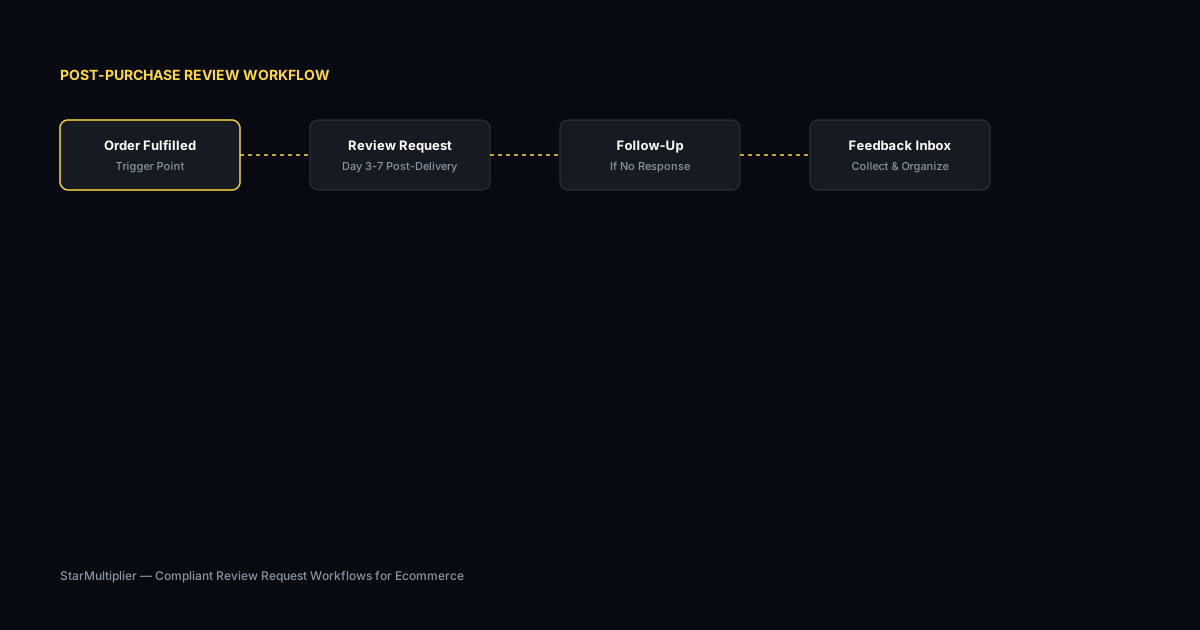
Start by reviewing how you currently collect reviews. Are you using automated requests, manual emails, or no structured process at all? Understanding your starting point helps you choose the right improvements.
Define your review collection goals
Set realistic targets based on your order volume. A store processing 100 orders per week might target 10-15 new reviews per week with an optimized request workflow.
Implement and iterate
Choose the right approach for your store size and implement it. Monitor response rates and adjust timing, messaging, and targeting based on performance data.
Step-by-step Shopify review app comparison framework
First, list your Shopify-specific requirements including integration with your fulfillment setup, whether you use Shopify Fulfillment Network or a third-party provider. Second, research apps that explicitly support your fulfillment configuration. Third, compare timing models and verify which apps offer delivery-based triggering. Fourth, test the top two apps with a subset of Shopify orders. Fifth, evaluate response rates and operational fit before committing to a specific app.
Practical examples
A Shopify store using third-party fulfillment with tracking numbers chose an app that connected to tracking data for delivery-based timing. The app detected when packages were marked as delivered and triggered review requests exactly five days later. Response rates improved by 30 percent compared to their previous app that sent requests based on estimated delivery dates. Another store compared three apps and chose one that offered tiered timing based on order value, sending faster follow-ups for higher-value purchases.
Example for growing stores
A mid-size store processing 300 weekly orders implemented automated review requests and saw review volume increase from 15 to 40 reviews per month within eight weeks.
Example for small stores
A boutique store with 50 weekly orders used targeted template messages for first-time buyers and repeat customers separately, improving response rates by 25 percent.
Common mistakes to avoid
A common mistake is choosing a Shopify review app based on rating alone without considering whether the app supports your specific fulfillment configuration. Apps with high ratings may be excellent for stores using Shopify's native fulfillment but less effective for stores using third-party logistics. Another mistake is ignoring data synchronization quality. Some apps sync Shopify data with delays that cause poorly timed requests.
Inconsistent timing
Sending requests at random intervals confuses customers and reduces response rates. Consistent timing based on delivery windows produces better results.
Generic messaging
Using the same message for every customer misses the opportunity to tailor requests by customer segment and purchase history.
Shopify review app comparison checklist
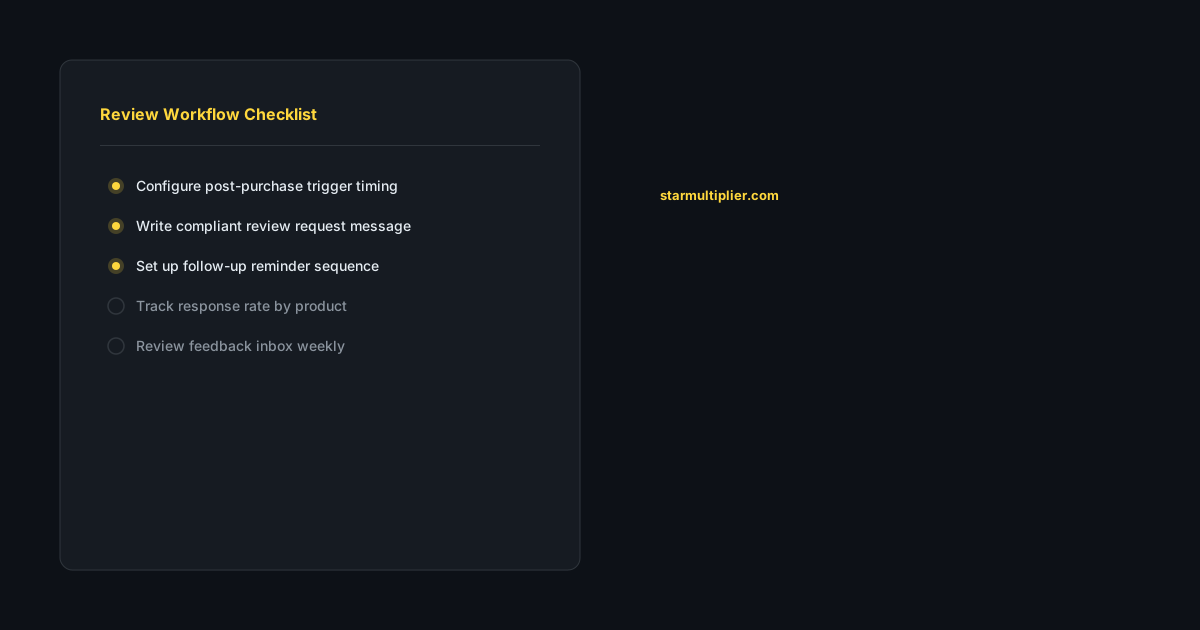
Verify that any app you consider integrates with your specific fulfillment setup, whether native Shopify fulfillment or third-party logistics. Confirm that the app supports delivery-based timing rather than just days-after-purchase timing. Check that the app syncs Shopify data in real time rather than through batch updates. Review the app's analytics to ensure it provides Shopify-specific metrics like collection funnel performance by product.
How StarMultiplier helps with Shopify review app comparison
StarMultiplier integrates deeply with Shopify's order and fulfillment systems to provide precise delivery-based timing for review requests. The platform connects to Shopify's tracking data to detect delivery confirmation and triggers requests at the optimal post-delivery interval. Stores using StarMultiplier on Shopify benefit from real-time data synchronization, automated timing, and analytics that show performance across their Shopify product catalog.
Want to see where your review workflow is leaking opportunities? Start with a StarMultiplier review audit.
How to compare Shopify review apps beyond feature lists
Comparing Shopify review apps beyond feature lists requires evaluating how each app performs in the specific context of your store rather than in a generic comparison framework. Request a trial of each app you are seriously considering and configure it as close to your intended production setup as possible. Measure setup time: how long does it take to go from installing the app to sending your first automated review request with your real Shopify order data and templates? This practical setup time often differs significantly from vendor claims and reveals how well the app's design matches non-technical operators. During the trial, observe how the app handles edge cases in your specific order data: what happens with orders that contain multiple products, with orders to international addresses that have longer delivery windows, with orders that were returned before the review request was sent? Edge case handling reveals the maturity and completeness of the app's logic more reliably than core functionality, which every app typically handles correctly. Evaluate the support experience during the trial period: submit questions that reflect real configuration challenges and note response time, answer quality, and whether support is accessible in the channels you prefer.
Shopify review app comparison: native versus third-party options
Shopify's native product review capabilities through the platform's built-in review system provide basic on-site review collection and display without requiring a third-party app. The built-in system is sufficient for stores in the very earliest stages of review collection and has the advantage of being included in the Shopify platform without additional cost. However, the built-in system lacks automated review request functionality, meaning customers can only leave reviews if they navigate to your product pages on their own rather than being prompted through automated post-purchase outreach. Third-party Shopify review apps add automated collection capabilities that the built-in system cannot provide. The range of third-party options spans from simple review request tools that focus exclusively on automated outreach to comprehensive review management platforms that handle collection, on-site display, moderation, external platform management, and analytics from a single interface. When comparing native versus third-party options, the key question is whether the incremental review volume that automated third-party outreach generates justifies the additional cost and complexity of a third-party app. For stores where passive review collection through the built-in system is generating adequate volume, the case for a third-party app is weaker. For stores where review collection is a strategic priority and passive collection is insufficient, the automation capabilities of third-party apps provide clear value.
Shopify review app compliance: comparing how different apps handle platform policies
Compliance with Shopify's review policies is an explicit criterion that should be evaluated in any Shopify review app comparison. Shopify's policies prohibit review gating, which is the practice of routing customers to review platforms only if they indicate prior satisfaction, or conversely, directing unsatisfied customers away from public review platforms to private channels. Some Shopify review apps include review gating as a feature, sometimes under different names like 'review screening,' 'customer sentiment routing,' or 'pre-review survey.' Before installing any Shopify review app, read the app's documentation and feature descriptions carefully to identify whether any feature that could constitute review gating is present. Ask the vendor directly: does your app include any feature that sends customers to different review destinations based on a satisfaction score or pre-screening response? A clear yes or no answer is informative; an evasive answer is a red flag. Review the app's marketing materials for any claims that imply suppression of negative reviews, boosting of star ratings through selective collection, or guaranteed rating improvements — these claims suggest the app is using or relying on non-compliant tactics to achieve results.
A practical Shopify review app comparison matrix
Build a practical comparison matrix for evaluating Shopify review apps by listing your requirements in rows and each app you are evaluating in columns. For each requirement-app combination, record a score of 0 (does not support), 1 (supports with limitations), or 2 (fully supports) based on your direct evaluation during a trial period. Requirements to include in your matrix: native Shopify integration without middleware; configurable timing by product category; first-time buyer versus repeat buyer segmentation; template customization with product name personalization; multi-platform review destination links; single automated follow-up reminder; review completion suppression; return order suppression; response rate reporting by product; mobile-optimized email templates; compliance without review gating features; and pricing that fits your budget at 2x your current order volume. After scoring each app on each requirement, sum the scores and sort by total to identify which app has the best coverage of your specific requirements. Weight the compliance requirement most heavily: an app that scores 2 on all other requirements but 0 on compliance is not a viable option regardless of its overall score.
Shopify review app comparison: asking the right questions during demos
Getting maximum value from Shopify review app demos requires preparing specific questions that reveal information the demo does not naturally surface. Ask: can you show me exactly what triggers a review request for a standard order, and what happens if the order is returned before the request fires? Ask: what happens when a customer has already left a review for a product they purchase again — do they receive another review request? Ask: can you show me the analytics dashboard with real performance data from a similar store, not a demo environment with sample data? Ask: what does the platform do if a customer replies to the review request email — where does that response go and who sees it? Ask: can you show me where the review platform link appears in the email and what happens when a customer clicks it — specifically how many steps does it take to submit a review after the click? Ask: has your platform ever been involved in a Shopify policy enforcement action related to review collection practices, and if so, what was the outcome? These questions reveal practical workflow details, real performance context, and compliance history that standard demos are designed to leave unaddressed.
How to avoid regret when choosing between Shopify review apps
Avoiding post-decision regret when choosing between Shopify review apps requires identifying the criteria that matter most to your long-term goals and weighting them heavily in the decision rather than optimizing for the criteria that are easiest to evaluate during a short trial period. It is common for stores to select a review app because it is easiest to set up and has the most features, and to regret the choice later when they discover compliance limitations, poor reporting depth at the volumes their business has grown to, or pricing that scales unfavorably as their order volume increases. To avoid these regret patterns, specifically evaluate compliance posture and pricing at 2x your current order volume before finalizing your decision — these criteria have the highest regret cost if you get them wrong and are straightforward to evaluate before purchasing. Ask about the vendor's history of compliance with Shopify and Google review policies directly rather than assuming all apps in the Shopify app store are compliant. Calculate the subscription cost at 1,000 orders per month even if you are currently at 100 orders per month, because a platform that costs $30 per month now and $300 per month at 1,000 orders changes the ROI calculation significantly for a growing store.