Ecommerce Customer Trust Strategy: Where Reviews Fit
Ecommerce Customer Trust Strategy: Where Reviews Fit — a practical guide for ecommerce stores. Learn how to build a more effective review collection process with better timing, messaging, and workflow.

Quick answer
An ecommerce customer trust strategy explains how product reviews, ratings, and customer feedback fit into the broader picture of building shopper confidence. Reviews work best as part of a coordinated strategy including clear policies and transparent communication.
What is ecommerce customer trust strategy?
An ecommerce customer trust strategy explains how product reviews, ratings, and customer feedback fit into the broader picture of building shopper confidence. Reviews are one of the most powerful trust-building tools available, but they work best as part of a coordinated strategy that also includes clear policies, transparent communication, and consistent brand presentation.
Why ecommerce customer trust strategy matters for ecommerce stores
Trust is the foundation of ecommerce conversion. When shoppers visit your product pages, they cannot touch or try your products. Reviews provide the social proof that bridges this gap and gives shoppers the confidence to purchase. A coordinated trust strategy ensures that reviews are presented effectively alongside other trust-building elements.
How to approach ecommerce customer trust strategy
Develop your trust strategy by identifying the specific barriers your customers face when considering a purchase. Common barriers include concerns about product quality, shipping reliability, return policy, and customer support responsiveness. Address each barrier with the appropriate trust signal, with reviews serving as the primary proof of product quality and customer satisfaction.
Assess your current review collection process
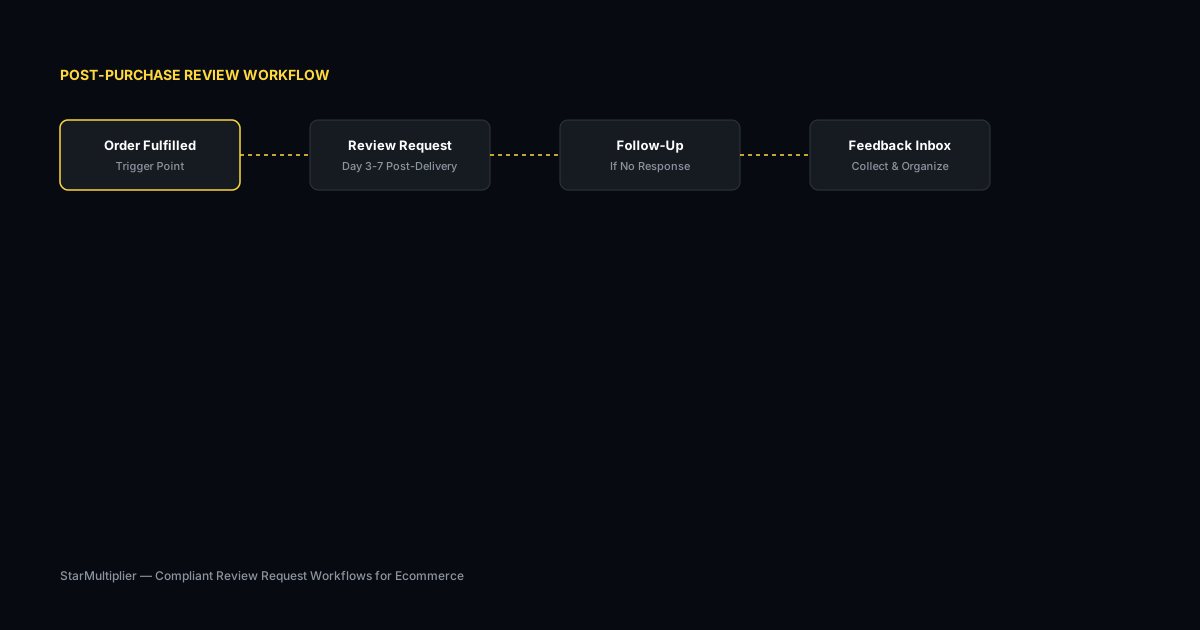
Start by reviewing how you currently collect reviews. Are you using automated requests, manual emails, or no structured process at all? Understanding your starting point helps you choose the right improvements.
Define your review collection goals
Set realistic targets based on your order volume. A store processing 100 orders per week might target 10-15 new reviews per week with an optimized request workflow.
Implement and iterate
Choose the right approach for your store size and implement it. Monitor response rates and adjust timing, messaging, and targeting based on performance data.
Step-by-step ecommerce customer trust strategy framework
First, audit your current product pages to identify trust gaps. Where do shoppers encounter information that might make them hesitate? Second, list the trust signals available to you, including reviews, ratings, security badges, return policies, and customer support information. Third, design a page layout that presents these signals prominently where shoppers need them most. Fourth, implement your layout and test it against your previous design. Fifth, monitor conversion rates and gather customer feedback to identify additional trust improvements.
Practical examples
A store selling premium audio equipment redesigned their product pages to feature review snippets prominently near the add-to-cart button. Shoppers could see verified purchase ratings without scrolling. The store saw a 22 percent increase in conversion rate for products with featured reviews compared to products where reviews were displayed lower on the page. Another store added a visible satisfaction guarantee badge alongside their review display and saw customer hesitation decrease measurably in post-purchase surveys.
Example for growing stores
A mid-size store processing 300 weekly orders implemented automated review requests and saw review volume increase from 15 to 40 reviews per month within eight weeks.
Example for small stores
A boutique store with 50 weekly orders used targeted template messages for first-time buyers and repeat customers separately, improving response rates by 25 percent.
Common mistakes to avoid
One mistake is relying on reviews as your only trust signal. Reviews work best alongside return policies, security badges, and transparent shipping information. Another mistake is hiding negative reviews. Displaying a mix of positive and constructive feedback actually increases trust because it signals authenticity. Shoppers are skeptical of products with exclusively positive reviews.
Inconsistent timing
Sending requests at random intervals confuses customers and reduces response rates. Consistent timing based on delivery windows produces better results.
Generic messaging
Using the same message for every customer misses the opportunity to tailor requests by customer segment and purchase history.
ecommerce customer trust strategy checklist
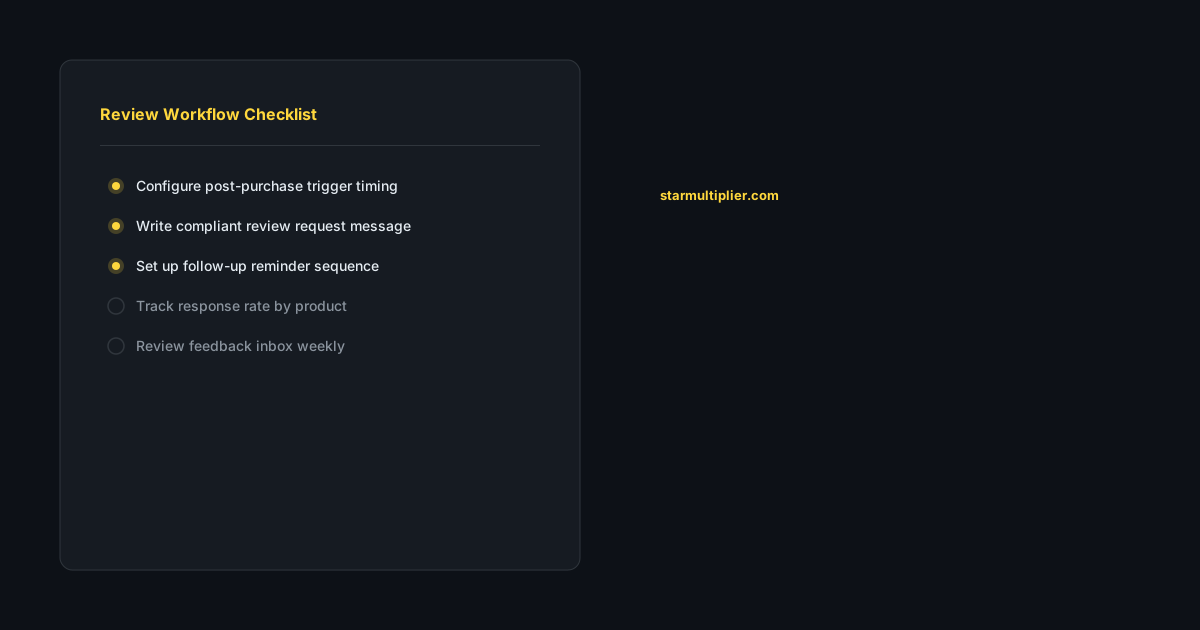
Audit your product pages to identify where customers might lose confidence. Place review content prominently near conversion points like the add-to-cart button. Combine reviews with other trust signals like return policy summaries and security badges. Display a representative mix of positive and negative reviews to demonstrate authenticity. Monitor conversion rates by product to identify which trust signals drive the most improvement.
Want to see where your review workflow is leaking opportunities? Start with a StarMultiplier review audit.
How StarMultiplier helps with ecommerce customer trust strategy
StarMultiplier supports your ecommerce trust strategy by helping you collect and display authentic product reviews at scale. The platform's automated request workflow ensures consistent review collection, while the analytics dashboard helps you track which products generate the most trusted feedback. Combining StarMultiplier's review collection with thoughtful product page design creates a comprehensive trust-building system for your store.
Building customer trust at every stage of the ecommerce journey
Customer trust in ecommerce is not a single moment — it is built progressively across multiple touchpoints from initial discovery through post-purchase experience. The discovery phase builds trust through consistent branding, professional website design, transparent pricing, and accessible product information. Shoppers who cannot find clear product descriptions, pricing, and shipping information on a first visit are unlikely to proceed to purchase regardless of how compelling the product itself is. The consideration phase builds trust through social proof: customer reviews, user-generated content, and specific product information that addresses the questions shoppers have when comparing options. This is where your review strategy has the most direct impact on trust-building, because authentic reviews from real customers provide the peer validation that brand-controlled content cannot replicate. The purchase phase builds trust through smooth checkout, recognizable payment methods, and clear order confirmation. Post-purchase trust is built through accurate delivery estimates, proactive shipping updates, and responsive customer service when problems arise. Each phase contributes to whether a customer trusts your brand enough to purchase again and whether they share their experience with others through reviews or word-of-mouth referral.
How reviews function as a trust infrastructure for ecommerce brands
Reviews serve as trust infrastructure for ecommerce brands because they provide future shoppers with a form of social validation that is more credible than brand-controlled content. When a shopper reads a detailed, specific review from a verified purchaser describing exactly how a product performed in a context similar to their own intended use, the persuasive value of that review exceeds that of any product description the brand could write. This is because reviews represent the perspectives of people who had no commercial incentive to present the product favorably — they purchased it, used it, and chose to share their experience. Building a strong review infrastructure requires two things: collecting enough reviews to provide meaningful social proof, and collecting honest reviews that include the range of experiences real customers have had. A product page with 200 reviews averaging 4.1 stars with varied, specific feedback provides more trust infrastructure than one with 10 uniformly perfect five-star reviews, because it looks like what real customers actually produce rather than curated testimonials. The goal of your review request strategy should be to build this trust infrastructure through consistent, compliant collection of authentic customer feedback.
Trust signals that support and amplify your review strategy
Reviews are the most powerful trust signal for ecommerce brands, but they work best when supported by a broader set of trust indicators that address the various concerns shoppers have during the purchase decision process. Return policy clarity reduces purchase risk anxiety: customers who know they can easily return a product if it does not meet their expectations are more willing to try your brand for the first time. Prominent, easy-to-find return policy information converts hesitant shoppers who have already read positive reviews but still have residual uncertainty about the purchase risk. Shipping transparency helps trust in the fulfillment phase: accurate delivery estimates, proactive shipping notifications, and responsive tracking information show customers that your brand is operationally reliable. Customer service accessibility signals that help is available if needed: live chat, clear support email, or phone contact information gives shoppers confidence that they will not be left without recourse if something goes wrong. Security indicators like SSL certificates and recognizable payment methods address payment security concerns that are particularly relevant for first-time customers who have no established trust history with your brand.
How to measure and improve customer trust in your ecommerce brand
Measuring customer trust in an ecommerce context requires tracking both quantitative metrics and qualitative signals. Quantitative trust metrics include repeat purchase rate, which shows how many customers trust your brand enough to buy again; net promoter score from post-purchase surveys, which measures likelihood of recommendation; cart abandonment rate, which often spikes when trust signals are weak on product pages or checkout; and first-time-to-repeat customer conversion rate, which shows how effectively you convert one-time buyers into loyal customers. Qualitative signals come from review content analysis and customer feedback: the themes that appear most frequently in positive reviews reveal what customers trust most about your brand, while recurring concerns in negative reviews or support tickets reveal where trust gaps exist. Improving customer trust requires addressing both dimensions. Quantitative improvements come from systematically strengthening your weakest trust touchpoints: if cart abandonment is high, improve trust signals on product pages and checkout. Qualitative improvements come from acting on the specific concerns customers raise in reviews and feedback, demonstrating through action that your brand listens and responds to customer input.