Review Request Tool vs Review Platform: Which Do You Need?
Review Request Tool vs Review Platform: Which Do You Need? — a practical guide for ecommerce stores. Learn how to build a more effective review collection process with better timing, messaging, and workflow.
Quick answer
Understanding review request tool vs review platform helps store owners decide whether they need a specialized tool focused on request automation or a full platform that handles both collection and display. Each approach has distinct advantages depending on your store's needs.
What is review request tool vs review platform?
Understanding review request tool vs review platform helps store owners decide whether they need a specialized tool focused on the request step or a full platform that manages requests alongside display, analytics, and other features. Each approach has distinct advantages depending on your current needs, and the wrong choice can lead to either missing features or unnecessary complexity.
Why review request tool vs review platform matters for ecommerce stores
The distinction between a request tool and a full platform significantly impacts your daily workflow. A request tool is specialized and simpler but may require additional tools for other review functions. A platform is comprehensive but may include features you do not need. Making the right choice depends on your current priorities and whether you want a focused solution or an all-in-one approach.
How to approach review request tool vs review platform
Evaluate your current review process to identify the gaps you actually need to fill. If your main challenge is sending timely requests and tracking responses, a request tool may be sufficient. If you also need help displaying reviews, analyzing sentiment, and managing responses across channels, a platform may be the better choice. Be honest about what you truly need rather than what sounds impressive.
Assess your current review collection process
Start by reviewing how you currently collect reviews. Are you using automated requests, manual emails, or no structured process at all? Understanding your starting point helps you choose the right improvements.
Define your review collection goals
Set realistic targets based on your order volume. A store processing 100 orders per week might target 10-15 new reviews per week with an optimized request workflow.
Implement and iterate
Choose the right approach for your store size and implement it. Monitor response rates and adjust timing, messaging, and targeting based on performance data.
Step-by-step review request tool vs review platform framework
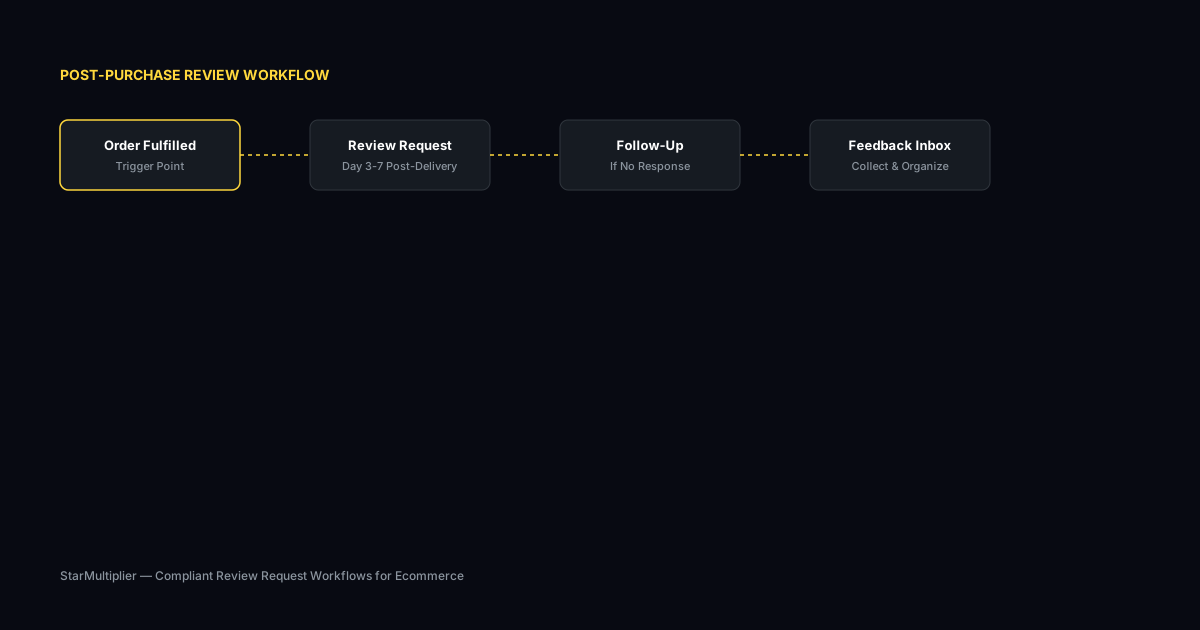
First, document your current review process and identify gaps. Second, separate your needs into request-specific and platform-wide categories. Third, evaluate request tools against your request-specific needs and platforms against your comprehensive needs. Fourth, if a request tool covers most needs, consider whether the remaining gaps are significant enough to justify a platform. Fifth, choose the option that best fits your actual gap analysis rather than your aspirational feature list.
Practical examples
A store that only needed help with request timing and delivery chose a dedicated request tool. The tool connected to their Shopify store, automated delivery-based timing, and tracked response rates. The store continued using their existing review display system and was satisfied with the focused approach. Another store that needed a complete overhaul of their review system chose a comprehensive platform that handled requests, display, analytics, and response management in a single solution.
Example for growing stores
A mid-size store processing 300 weekly orders implemented automated review requests and saw review volume increase from 15 to 40 reviews per month within eight weeks.
Example for small stores
A boutique store with 50 weekly orders used targeted template messages for first-time buyers and repeat customers separately, improving response rates by 25 percent.
Common mistakes to avoid
One mistake is choosing a platform when a tool would suffice, adding unnecessary cost and complexity. Another mistake is choosing a tool when a platform is needed, creating gaps that require stitching together additional solutions. The key is accurate self-assessment of your current needs rather than guessing what you might need in the future.
Inconsistent timing
Sending requests at random intervals confuses customers and reduces response rates. Consistent timing based on delivery windows produces better results.
Generic messaging
Using the same message for every customer misses the opportunity to tailor requests by customer segment and purchase history.
review request tool vs review platform checklist
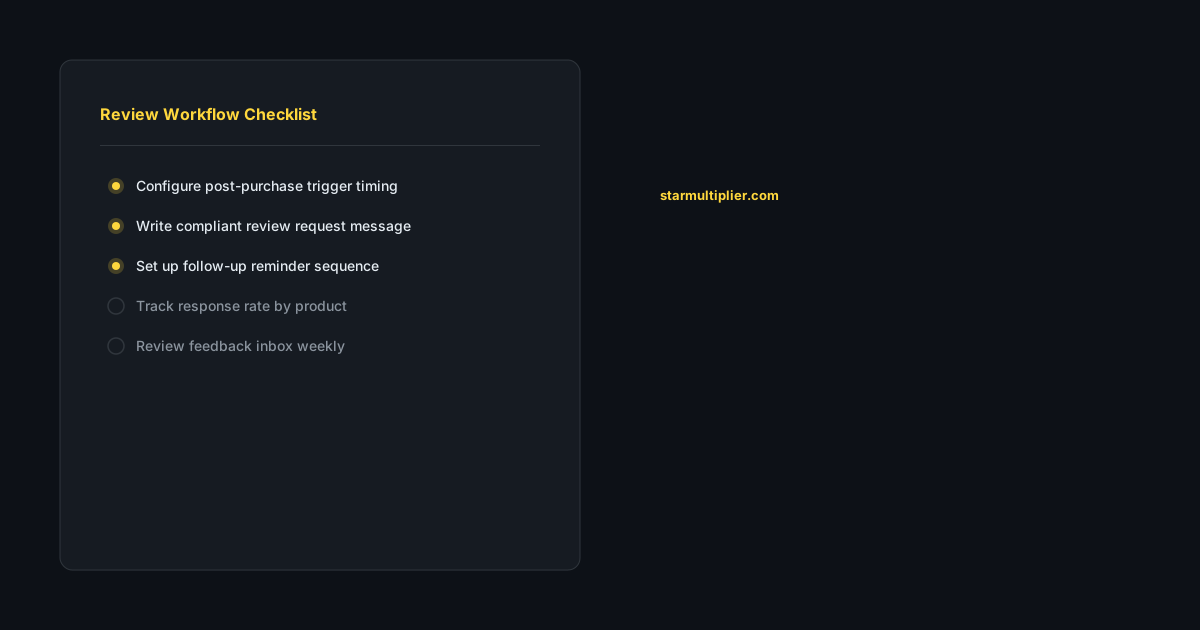
List your top three review-related challenges honestly. If all three relate to request automation and timing, a specialized tool is likely the right choice. If your challenges span request management, display optimization, and analytics, a platform is more appropriate. Choose based on your actual challenges rather than what solutions promise in their marketing materials.
How StarMultiplier helps with review request tool vs review platform
StarMultiplier bridges the gap between a dedicated request tool and a full platform. The platform provides specialized review request automation with delivery-based timing and response tracking while also offering a central inbox, analytics dashboard, and response management features. This balanced approach gives stores the focus of a request tool with the comprehensive coverage of a platform.
Want to see where your review workflow is leaking opportunities? Start with a StarMultiplier review audit.
Understanding the distinction between a review request tool and a review platform
The distinction between a review request tool and a review platform matters for choosing the right infrastructure for your ecommerce operation. A review request tool focuses specifically on the post-purchase outreach workflow: it sends automated review request emails, manages follow-up sequences, and reports on response rates. It does not typically manage on-site review display, review moderation, or cross-platform review monitoring. A review platform provides a more comprehensive infrastructure that includes not just review request sending but also on-site review widgets for displaying reviews on your product pages, a moderation interface for managing published reviews, analytics for monitoring review performance across platforms, and often a review generation network that connects your products to external review platforms. The right choice between a review request tool and a full review platform depends on what you actually need. If your primary gap is in the review collection workflow — you need more reviews to come in, and your current outreach process is inconsistent or absent — a focused review request tool addresses that specific gap without the additional cost and complexity of a full review platform. If you need both collection infrastructure and on-site display infrastructure, a full review platform may be more efficient despite its higher cost and complexity.
When a focused review request tool is the better choice
A focused review request tool is the better choice when your primary operational gap is in the collection workflow rather than in review display or management. If you already have on-site reviews functioning through Shopify's built-in review system or another display tool, and the problem is simply that you are not collecting enough new reviews through proactive outreach, adding a full review platform is likely over-investment. A focused review request tool costs less, is faster to set up, and requires less ongoing maintenance than a full platform while addressing the specific gap — collection frequency and quality — that is limiting your review count. A focused tool is also the better choice when your team's bandwidth for learning and maintaining new software is limited. Full review platforms have more features, which means more to configure, more to monitor, and more to troubleshoot when something goes wrong. A focused tool that does one thing exceptionally well is often more effective in practice than a comprehensive platform where core features compete for attention with secondary ones. Finally, a focused tool is appropriate when your review strategy is itself relatively focused: if you collect reviews primarily through one or two channels and display them on your own website, you do not need the multi-platform management capabilities that justify the additional cost of a full review platform.
How to decide which approach fits your current stage
Deciding between a review request tool and a full review platform requires an honest assessment of your current review collection maturity and your specific operational gaps. If you have never run a systematic review collection process, start with a focused review request tool and build your workflow fundamentals before adding complexity. The most common mistake in review infrastructure investment is choosing enterprise-level capability before the fundamental workflow is functioning consistently. Get your basic review request sequence working reliably — triggering correctly, personalizing accurately, following up once — and measure the response rate improvements before deciding whether additional platform capabilities are warranted. If you have a functioning basic workflow but are limited by the inability to display reviews on your site, manage reviews across multiple platforms from one place, or analyze review performance at a granular level, a full review platform investment is justified. Map the specific capabilities you need against the capabilities of the tools you are evaluating, and choose the tool that covers your actual requirements without significant over-investment in capabilities you will not use in the next 12 months.
Decision framework for choosing between a review request tool and a review platform
Use this decision framework to determine whether a focused review request tool or a comprehensive review platform is the right investment for your ecommerce operation. Start by identifying your primary gap: if the gap is that you are not sending enough review requests to generate adequate review volume, a review request tool addresses the primary gap directly and a full platform adds capabilities you may not need. If the gap is that you have adequate review collection but poor organization, management, or analysis of reviews across multiple platforms, a full platform addresses your primary gap better than a focused tool. Next, assess your operational readiness: do you have the team capacity to configure, manage, and maintain a more complex platform, or do you need a simple, low-maintenance solution? More capable platforms require more operational investment to realize their potential. Finally, assess your budget: the cost difference between a focused tool and a full platform can be 3 to 10 times, and that cost difference should be justified by a proportional improvement in the outcomes that matter most to your business. If a focused tool at $50 per month addresses your primary gap and a full platform at $300 per month addresses your primary gap plus several secondary gaps you could live without addressing now, the focused tool is the better investment for your current stage.
Evolving from a review request tool to a full review platform as your business grows
The transition from a focused review request tool to a full review management platform should be timing-appropriate rather than driven by desire to have enterprise capabilities before they are operationally relevant. The transition makes sense when you have outgrown your current tool's capabilities in ways that are measurably affecting outcomes: response rates are declining because you cannot segment customers finely enough, product page performance is suffering because you cannot manage on-site review display effectively from your current tool, or your team is spending excessive time on manual review management tasks that a full platform would automate. Plan the transition carefully to avoid coverage gaps: configure the new platform completely before decommissioning the old tool, import all suppression lists and customer data from the current tool, test the new platform with a limited order segment before full deployment, and allow a two-week parallel operation period where both tools are active before shutting down the old one. Document the transition milestone as a strategic growth marker: the investment in a full review management platform signals that review collection has become a strategic priority significant enough to justify professional infrastructure, which is a meaningful commitment to the ongoing importance of customer feedback as a business asset.
When a review request tool is the better choice despite a limited feature set
A focused review request tool is the better choice over a comprehensive review platform in scenarios where the additional capabilities of the platform do not translate into additional business value for your specific operation. If your review strategy involves directing customers to a single destination — only Google Business Profile, or only your on-site review system — and you do not need cross-platform management, a focused request tool handles this use case as effectively as a platform. If your team's bandwidth for review operations is limited and additional features would require capacity your team does not have, a simpler tool produces better results than a complex platform that remains partially configured. If your current business stage makes the ROI of advanced features speculative rather than demonstrated, the lower subscription cost of a focused tool preserves budget for investments with more certain returns. The clearest signal that a focused tool is the right choice is when you can map every feature of the alternative platform to a specific business use case and timeline, and when two or more of those use cases require capabilities beyond your current operational readiness to implement.