Review Request Policy for Ecommerce Teams
Review Request Policy for Ecommerce Teams — a practical guide for ecommerce stores. Learn how to build a more effective review collection process with better timing, messaging, and workflow.
Quick answer
A review request policy for ecommerce documents the rules, guidelines, and procedures your team follows when asking customers for product reviews. A clear policy ensures consistency across team members and simplifies training.
What is review request policy ecommerce?
A review request policy for ecommerce documents the rules, guidelines, and procedures your team follows when asking customers for product reviews. A clear policy ensures consistency across team members, simplifies training, and helps maintain compliance. A written policy transforms tribal knowledge into documented standards that the entire organization can follow.
Why review request policy ecommerce matters for ecommerce stores
A documented policy is essential for teams of more than one person. Without a policy, each team member may develop their own approach to review requests, leading to inconsistent messaging and potential compliance issues. A policy creates a single source of truth that everyone follows, ensuring consistent customer experience and risk management.
How to approach review request policy ecommerce
Develop your review request policy around five sections: timing rules that specify when to send requests, messaging guidelines that define acceptable language and tone, incentive policies that clarify what incentives are permitted, response procedures that outline how to handle feedback, and compliance requirements that capture all applicable rules and regulations.
Assess your current review collection process
Start by reviewing how you currently collect reviews. Are you using automated requests, manual emails, or no structured process at all? Understanding your starting point helps you choose the right improvements.
Define your review collection goals
Set realistic targets based on your order volume. A store processing 100 orders per week might target 10-15 new reviews per week with an optimized request workflow.
Implement and iterate
Choose the right approach for your store size and implement it. Monitor response rates and adjust timing, messaging, and targeting based on performance data.
Step-by-step review request policy ecommerce framework
First, draft each section of your policy based on your current practices and industry standards. Second, review the draft with your team and legal advisors if applicable. Third, publish the policy and communicate it clearly to everyone involved in review collection. Fourth, train team members on the policy and verify understanding. Fifth, review the policy quarterly and update it based on changing requirements or lessons learned.
Practical examples
A team of three managing review collection for a mid-size store created a one-page review request policy. The policy covered timing rules, message template approval process, and compliance guidelines. New team members read the policy during onboarding and knew exactly how to handle review requests from day one. Another store created a more detailed policy that included escalation procedures for handling unusual customer situations, helping the team respond consistently even in non-standard scenarios.
Example for growing stores
A mid-size store processing 300 weekly orders implemented automated review requests and saw review volume increase from 15 to 40 reviews per month within eight weeks.
Example for small stores
A boutique store with 50 weekly orders used targeted template messages for first-time buyers and repeat customers separately, improving response rates by 25 percent.
Common mistakes to avoid
One mistake is creating a policy that is too rigid to accommodate reasonable exceptions. Build flexibility into the policy while maintaining clear standards. Another mistake is publishing a policy and never referring to it again. Policies are living documents that should be reviewed and updated regularly.
Inconsistent timing
Sending requests at random intervals confuses customers and reduces response rates. Consistent timing based on delivery windows produces better results.
Generic messaging
Using the same message for every customer misses the opportunity to tailor requests by customer segment and purchase history.
review request policy ecommerce checklist
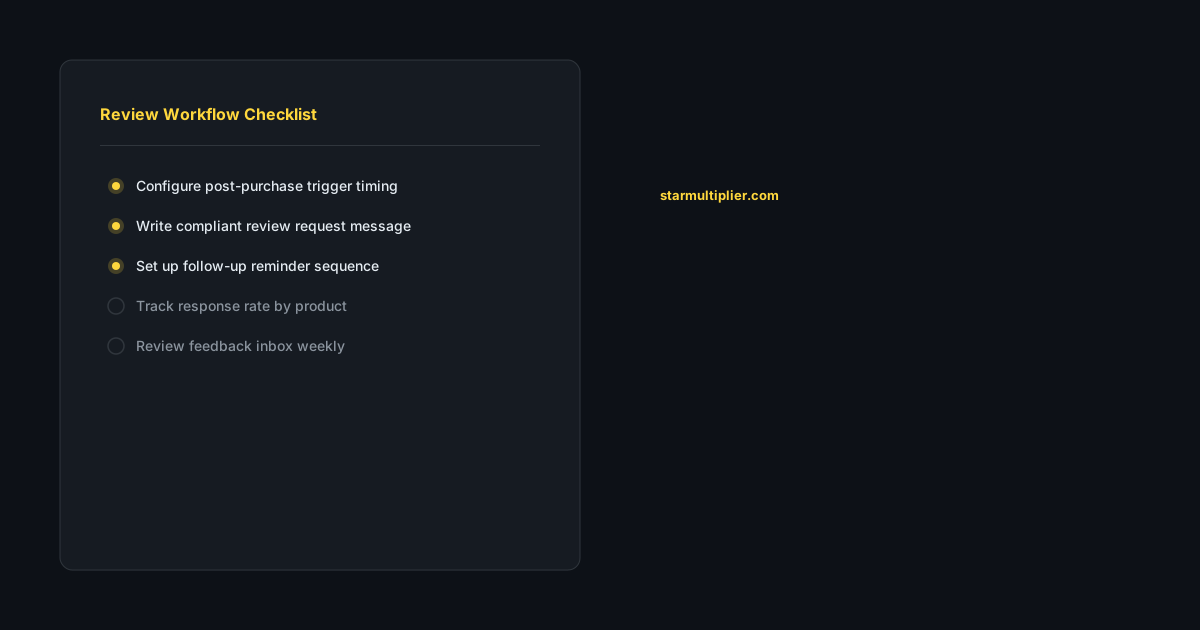
Document your timing rules, messaging guidelines, incentive policies, response procedures, and compliance requirements in a single policy document. Review the policy with your team and relevant advisors. Train all team members on the policy. Review and update the policy quarterly. Keep the policy accessible for reference by anyone involved in review collection.
How StarMultiplier helps with review request policy ecommerce
StarMultiplier helps stores implement their review request policies through automated enforcement of timing rules and message content guidelines. The platform's configurable settings allow stores to encode their policy requirements directly into the review workflow, ensuring consistent application across all orders and customers.
Want to see where your review workflow is leaking opportunities? Start with a StarMultiplier review audit.
What an ecommerce review request policy should cover
An ecommerce review request policy is an internal document that defines how your brand collects reviews, what practices are permitted and prohibited, who is responsible for managing the review collection process, and how compliance with the policy is maintained over time. A well-written review request policy covers four main areas. The first area is eligibility: which customers are eligible to receive review requests and under what conditions. Define the customer segments that will receive review requests — all customers who made a purchase, customers who purchased specific product categories, customers above certain order values, or other criteria. Define the conditions under which customers should not receive review requests: recently returned orders, active dispute resolution, customers who have opted out, and customers who have already reviewed the specific product. The second area is permitted practices: what the review request workflow is allowed to do. This section describes the timing rules, template content guidelines, follow-up rules, and review destination policy that govern compliant collection. The third area is prohibited practices: what the review request workflow is explicitly not allowed to do. List every practice that is prohibited by platform policies or regulatory requirements: review gating, satisfaction pre-screening, selective invitation, fake review generation, undisclosed incentivization. The fourth area is compliance management: who is responsible for ensuring the policy is followed, how violations are identified and addressed, and how the policy is updated as platform policies change.
How to write a review request policy that protects your business
Writing a review request policy that protects your business requires being specific rather than aspirational. A policy that says 'we will collect reviews ethically and in compliance with all applicable policies' provides no operational guidance and does not protect the business from compliance failures. A policy that says 'review requests will be sent to all customers who placed a non-returned order between 7 and 14 days after confirmed delivery, excluding customers who have previously opted out of review communications, using templates that do not contain language implying only positive feedback is welcome' provides clear operational guidance and creates accountability for specific practices. For each prohibited practice, include both the prohibition and the reason: 'We do not route customers to different review destinations based on their reported satisfaction. This practice is prohibited by Shopify, Google, and Trustpilot policies and would violate the trust of customers and future shoppers who rely on our reviews for accurate information.' The reason makes the prohibition easier to explain to team members who might otherwise find it unclear why a seemingly effective tactic is off-limits. Review the policy with your team annually and whenever platform policies change, updating the policy to reflect current requirements rather than allowing it to become outdated.
Communicating your review request policy to stakeholders and partners
Your review request policy is not just an internal document — it is a communication tool for aligning stakeholders and partners on how your brand approaches review collection. Sharing the policy with marketing agencies, technology vendors, and customer service teams who interact with your review collection process ensures that everyone involved understands the standards you hold yourself to and the practices you expect from them. When onboarding a new review collection software vendor, share your policy with them and ask them to confirm that their platform's features and configurations support compliance with your policy. If a vendor's platform includes features that conflict with your policy — review gating tools, satisfaction pre-screening, or selective customer routing — address this conflict before deploying their software rather than discovering it during a platform audit. For marketing agencies that manage review collection as part of a broader service engagement, include your review request policy as an appendix to the agency agreement with explicit acknowledgment that the agency is responsible for operating within policy parameters. This protects both your brand and the agency by establishing clear expectations from the start of the relationship rather than discovering disagreements about practices after they have already been implemented.
Sample review request policy language for ecommerce stores
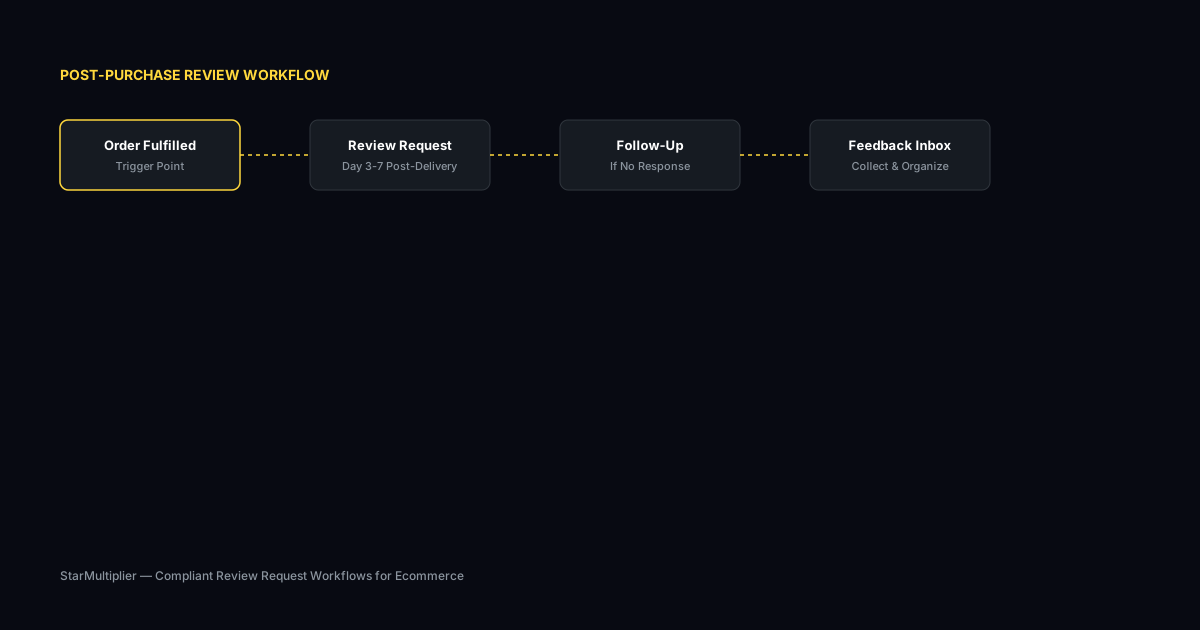
The following sample language provides a starting point for writing your own review request policy. Adapt it to your specific business before using. 'Review Request Policy: [Brand Name] collects product reviews through an automated post-purchase outreach workflow. All customers who complete a non-returned order are eligible to receive a review request for their purchased products. Review requests are sent via email approximately [X] days after order fulfillment, with a single reminder sent [Y] days later to customers who did not respond to the initial request. All customers within a defined segment receive the same review request content and are directed to the same review platform regardless of any feedback they may have shared. We do not use satisfaction pre-screening, selective customer routing, or any feature designed to prevent specific customers from reaching public review platforms. We do not offer compensation in exchange for reviews. We do not generate fake reviews. Customers who wish to opt out of review request communications may do so by clicking the unsubscribe link in any review request email. Customers whose orders are returned or refunded will not receive review requests for those orders. This policy is reviewed quarterly and updated to reflect changes in the policies of the review platforms we use.' Adapt this language to your specific timing, segment definitions, and review platform destinations before finalizing.
How your review request policy protects you during a compliance inquiry
A well-documented review request policy protects your business during a compliance inquiry from a review platform by demonstrating that you have made deliberate, good-faith efforts to comply with platform policies. If a review platform contacts you about your review collection practices, the ability to produce a written policy that prohibits non-compliant practices, combined with workflow documentation that shows the policy is implemented as written, makes a compelling case that any compliance issue is an oversight rather than an intentional violation. Without documentation, a compliance inquiry puts you in the position of defending practices you cannot demonstrate were deliberately designed to be compliant. A written policy also protects you in the scenario where a team member makes a configuration change that introduces non-compliance. If the change violates a written policy that the team member was expected to follow, the policy provides both the standard against which the violation can be assessed and the basis for a corrective action process. Document the compliance inquiry response process in your policy: who is notified when a compliance inquiry is received, who is responsible for preparing the response, what documentation is assembled as part of the response, and what review is conducted after an inquiry to prevent recurrence of any issue identified.
Communicating your review request policy to your customers
Transparently communicating your review request policy to your customers is not a legal requirement in most jurisdictions but is a best practice that builds trust and reduces friction around your review collection process. Customers who understand how you collect reviews — who receives requests, how frequently, and where they can opt out — are less likely to perceive review requests as unexpected or intrusive. Include a brief description of your review collection process in your post-purchase email sequence: 'We will follow up after your order arrives with an invitation to share your experience — your feedback helps us improve and helps other customers make informed decisions.' Include your review request opt-out process in your privacy policy or customer communication policy page so customers who want to understand their options can find the information. A 'How we collect reviews' section in your store's FAQ addresses the growing segment of online shoppers who are aware of review manipulation concerns and want to understand your practices before trusting your review profile.