Compliant Review Workflow for Ecommerce Stores
Compliant Review Workflow for Ecommerce Stores — a practical guide for ecommerce stores. Learn how to build a more effective review collection process with better timing, messaging, and workflow.
Quick answer
A compliant review workflow ensures your review collection process follows platform policies, ethical best practices, and regulatory requirements at every step. Building compliance into the workflow from the start is easier than retrofitting it later.
What is compliant review workflow?
A compliant review workflow ensures your review collection process follows platform policies, ethical best practices, and regulatory requirements at every step. Building compliance into the workflow from the start is easier than retrofitting it later. A compliant workflow protects your store from penalties and maintains customer trust.
Why compliant review workflow matters for ecommerce stores
Compliance matters because review collection policies exist to protect both consumers and honest businesses. Following the rules keeps your store in good standing with ecommerce platforms and regulatory bodies. Compliance failures can result in platform penalties, legal exposure, and damage to your brand reputation.
How to approach compliant review workflow
Design your compliant workflow around three core principles: transparency, honesty, and customer control. Transparency means clearly communicating that you are requesting a review. Honesty means not influencing review content or selectively displaying feedback. Customer control means making it easy for customers to leave honest feedback without feeling pressured.
Assess your current review collection process
Start by reviewing how you currently collect reviews. Are you using automated requests, manual emails, or no structured process at all? Understanding your starting point helps you choose the right improvements.
Define your review collection goals
Set realistic targets based on your order volume. A store processing 100 orders per week might target 10-15 new reviews per week with an optimized request workflow.
Implement and iterate
Choose the right approach for your store size and implement it. Monitor response rates and adjust timing, messaging, and targeting based on performance data.
Step-by-step compliant review workflow framework
First, review the compliance requirements for your ecommerce platform, industry, and region. Second, document your compliance obligations in a clear checklist. Third, configure your review workflow to enforce compliance requirements automatically. Fourth, implement compliance checks at each stage of your workflow. Fifth, conduct periodic compliance audits to ensure continued alignment with evolving requirements.
Practical examples
A store selling nutritional supplements implemented a compliant review workflow that included clear phrasing in all requests: We value your honest feedback. The team also removed any language that could be interpreted as incentivizing positive reviews. The store avoided policy violations while maintaining strong review volume. Another store discovered a compliance issue during an audit when they realized their follow-up messages did not include an opt-out option. They corrected the issue immediately and updated their workflow to include opt-out links in all messages.
Example for growing stores
A mid-size store processing 300 weekly orders implemented automated review requests and saw review volume increase from 15 to 40 reviews per month within eight weeks.
Example for small stores
A boutique store with 50 weekly orders used targeted template messages for first-time buyers and repeat customers separately, improving response rates by 25 percent.
Common mistakes to avoid
One mistake is treating compliance as a one-time checklist rather than an ongoing process. Policies change, and your workflow must evolve with them. Another mistake is focusing only on platform compliance while ignoring regulatory requirements. Depending on your industry and location, there may be additional legal obligations beyond platform policies.
Inconsistent timing
Sending requests at random intervals confuses customers and reduces response rates. Consistent timing based on delivery windows produces better results.
Generic messaging
Using the same message for every customer misses the opportunity to tailor requests by customer segment and purchase history.
compliant review workflow checklist
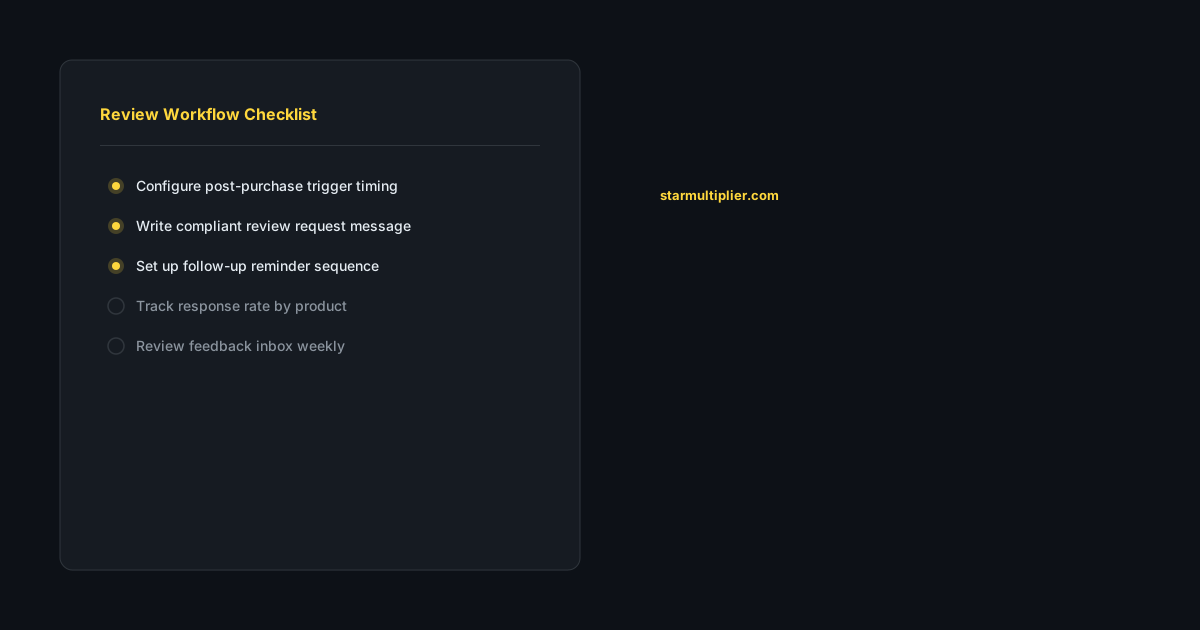
Document all compliance requirements relevant to your store including platform policies, industry regulations, and regional laws. Configure your workflow to enforce compliance requirements automatically. Build compliance checks into each stage of your review collection process. Conduct quarterly compliance audits to verify continued alignment. Document your compliance efforts as evidence of good faith compliance.
How StarMultiplier helps with compliant review workflow
StarMultiplier includes built-in compliance features that help stores maintain a compliant review workflow. The platform enforces timing restrictions, prevents prohibited messaging content, and includes opt-out options in all request messages. Stores using StarMultiplier can focus on their review collection strategy knowing that the platform handles fundamental compliance requirements automatically.
Want to see where your review workflow is leaking opportunities? Start with a StarMultiplier review audit.
The five components of a compliant review workflow
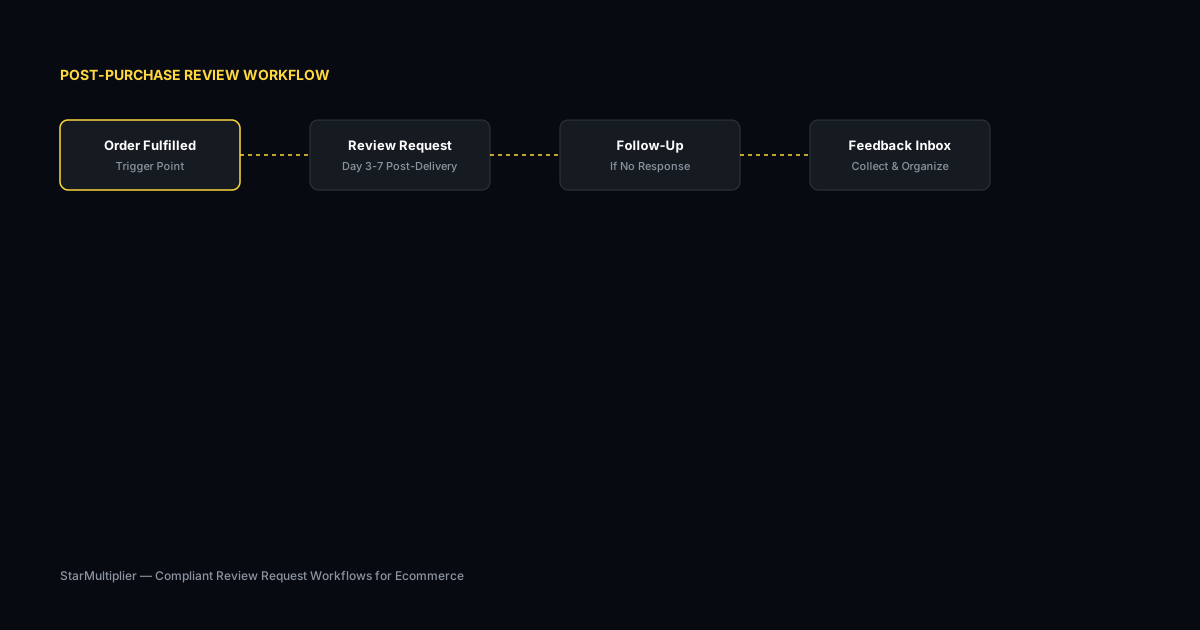
A compliant review workflow can be described in terms of five components, each of which must meet specific requirements to ensure the full workflow meets platform policies and regulatory standards. The first component is the trigger: who receives a review request and when. A compliant trigger invites all customers within a defined segment — not customers filtered by predicted satisfaction — at a timing that reflects genuine product evaluation opportunity rather than an attempt to catch customers before they form a negative opinion. The second component is the message: what the review request says and implies. Compliant messaging invites honest feedback without implying that only positive responses are welcome and without conditioning the review destination on the customer's response. The third component is the destination: where customers are directed to leave their review. A compliant workflow directs all customers in a segment to the same review destination regardless of any feedback they may have provided through the message. The fourth component is follow-up: how non-responders are handled. A compliant follow-up sends a single reminder with the same destination link to all non-responders without filtering based on any satisfaction signal. The fifth component is suppression: which customers are removed from the sequence. Compliant suppression removes customers who have already reviewed, customers who have opted out, and customers whose orders were returned or refunded — not customers who indicated dissatisfaction through any feedback channel.
How to audit your existing workflow against compliance requirements
Auditing your existing review workflow against compliance requirements is a structured process that should be conducted at least quarterly and whenever your review collection software introduces new features or updates its default configurations. The audit examines each of the five workflow components against the current policies of all review platforms you use. For the trigger component, verify that your invitation logic does not include any satisfaction pre-screening: is there any question or filter that determines whether a customer is invited to leave a review based on their predicted or stated satisfaction? For the message component, read every template in your review request sequence for language that implies selectivity: any phrase that suggests only positive experiences should be shared in a public review is potentially non-compliant. For the destination component, verify that all customers in each segment receive the same review platform link and that no satisfaction-based routing exists at this stage. For the follow-up component, verify that the same destination link appears in reminder emails as in initial requests and that no branching occurs based on any customer behavior between the initial request and the reminder. For the suppression component, verify that the suppression logic removes customers based on review completion, opt-out status, and order status — not based on any satisfaction signal.
Running a compliant review workflow that also maximizes collection effectiveness
A common misconception is that compliance constraints limit review collection effectiveness. In practice, well-designed compliant workflows consistently produce strong review volumes and response rates because they focus on the factors that genuinely drive review completion — timing, relevance, message quality, and simplicity — rather than on manipulation of who is invited and where they are directed. The most effective compliant workflows invest heavily in timing optimization, ensuring requests arrive when customers have had the optimal amount of time to evaluate their purchase. They invest in template quality, writing messages that feel personal, specific, and honest rather than generic and automated. They invest in friction reduction, ensuring that the path from review request email to completed review is as short and simple as possible. They invest in segmentation, differentiating the message for different customer types and product categories to maximize relevance for each audience. None of these investments conflict with compliance requirements — they work entirely within compliant parameters to achieve better results than non-compliant tactics that trade authentic engagement for artificial rating optimization. The brands that achieve the best review collection results over the long term are those that treat compliance not as a constraint to work around but as a design principle that guides the workflow toward authentic, sustainable collection practices.
Quarterly compliance audit checklist for your review workflow
Run this quarterly compliance audit to verify that your review workflow remains aligned with current platform policies. Policy review: have you read the current review policies for Shopify, Google Business Profile, and any other review platform where you collect or display reviews within the past 90 days? Trigger compliance: does your trigger logic send review requests to all customers within your defined segment without filtering based on any satisfaction signal? Template compliance: do your review request templates use language that invites honest feedback from all customers without implying that only positive responses should proceed to the review platform? Destination compliance: do all customers in each segment receive the same review platform link regardless of any intermediate feedback they provide? Follow-up compliance: does your follow-up sequence send a single reminder to all non-responders without branching based on any customer behavior between the initial request and the reminder? Suppression compliance: is your suppression logic removing only customers who have reviewed, opted out, or had orders returned — not customers who shared dissatisfaction through a direct feedback channel? Incentive compliance: if you offer any incentive in connection with reviews, is the arrangement properly disclosed in all review request communications in compliance with FTC and platform-specific requirements?
How to build compliance into your review workflow from the first day
Building compliance into a review workflow from the first day is significantly easier than retrofitting compliance into an existing non-compliant workflow. When you are designing a review collection process for the first time or rebuilding an existing one, start with compliance as a design constraint rather than as an afterthought. The compliance constraint eliminates certain design options immediately — review gating, satisfaction pre-screening, selective invitation — and focuses your design effort on the compliant alternatives that produce better authentic results anyway. Write your workflow requirements document with compliance language built in: 'Review requests will be sent to all customers who placed a non-returned order in the past 7 days who have not previously opted out or reviewed this product, without any filtering based on satisfaction data.' This specification language ensures that anyone implementing or modifying the workflow in the future understands the compliance intent, not just the technical configuration. Design your suppression logic around review completion, opt-out status, and return status only — not around any satisfaction signal. Document every design decision that was made for compliance reasons so that future team members understand why certain seemingly attractive features are absent from the workflow.
How to verify your review workflow is compliant before a platform audit
Preparing for a potential platform compliance audit requires verifying your review workflow against the most current version of each platform's review policies rather than against your memory of the policies as they existed when you designed the workflow. Platforms update their review policies periodically, and a workflow that was fully compliant at design time may be out of compliance if significant time has passed without a policy review. Pull the current review policy from Shopify, Google Business Profile, and any third-party review platform you direct customers to, and read each one carefully in the context of your current workflow design. For each policy requirement, document specifically how your workflow meets it. If any policy requirement is ambiguous as it applies to your specific workflow, contact the platform's policy team for clarification before an audit occurs rather than waiting to explain your interpretation after the fact. Preserve this pre-audit compliance documentation — the policies you reviewed, the date you reviewed them, and your compliance mapping — as evidence that you have made good-faith efforts to maintain compliance with current requirements.