Safe Review Request Practices for Ecommerce Brands
safe review request practices — a practical guide for ecommerce stores. Learn how to build a more effective review collection process with better timing, messaging, and workflow.
Quick answer
safe review request practices focus on collecting genuine customer feedback without using tactics that violate platform policies or damage customer trust. Safe practices protect your store from review removal, policy warnings, and account penalties.
What is safe review request practices?
Safe Review Request Practices for Ecommerce Brands focus on collecting genuine customer feedback without using tactics that violate platform policies or damage customer trust. Safe practices protect your store from penalties while building a review collection process that customers respect.
Why safe review request practices matters for ecommerce stores
safe review request practices matters because the line between a legitimate review request and a policy violation can be subtle. Understanding safe practices helps your team confidently build a review collection process that produces authentic feedback without compliance risk.
How to approach safe review request practices
The most important safe review request practices include asking all customers equally regardless of their likely rating, avoiding language that pressures customers for positive feedback, not offering incentives that condition rewards on positive reviews, and responding professionally to all feedback including constructive reviews.
Assess your current review collection process
Start by reviewing how you currently collect reviews. Are you using automated requests, manual emails, or no structured process at all? Understanding your starting point helps you choose the right improvements.
Define your review collection goals
Set realistic targets based on your order volume. A store processing 100 orders per week might target 10-15 new reviews per week with an optimized request workflow.
Implement and iterate
Choose the right approach for your store size and implement it. Monitor response rates and adjust timing, messaging, and targeting based on performance data.
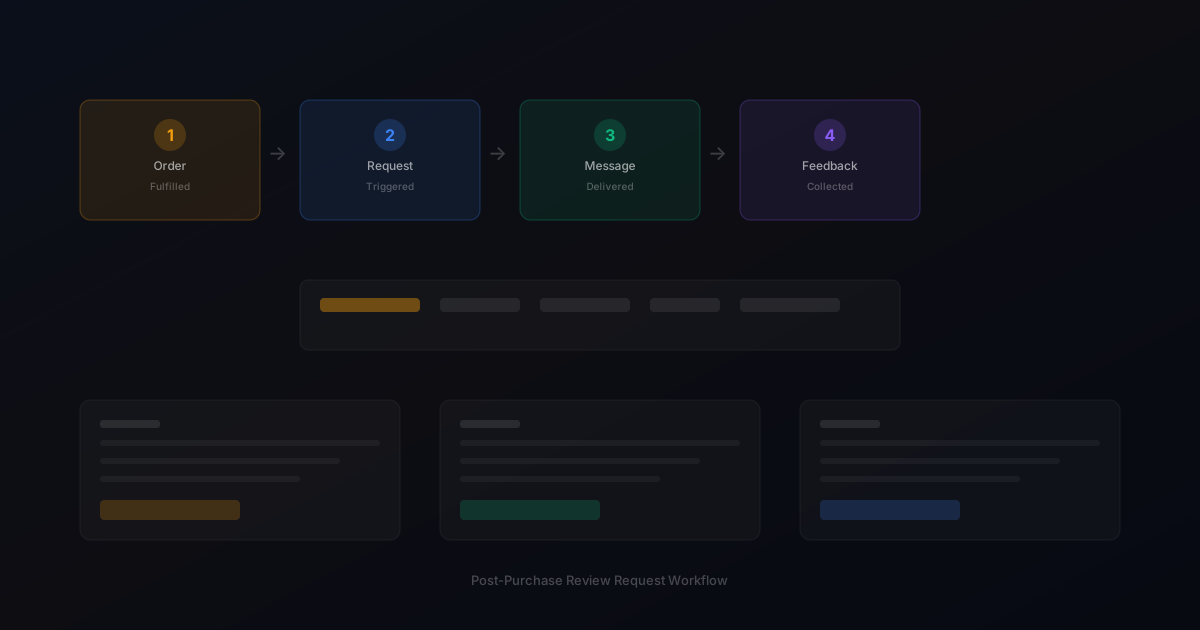
Step-by-step safe review request practices framework
1. Audit your current review request process for any practices that could be interpreted as gating or manipulation. 2. Update message templates to use neutral language that welcomes honest feedback. 3. Review any incentive programs to ensure they follow platform rules. 4. Train your team on safe review request practices. 5. Set up a regular compliance review schedule. 6. Document your practices for reference during team changes.
Practical examples
A brand reviewed their safe review request practices and realized they had been using review gating logic in their customer satisfaction survey. They immediately disabled the gating feature and replaced it with an equal-ask workflow. The change eliminated the compliance risk while maintaining their review volume.
Example for growing stores
A mid-size store processing 300 weekly orders implemented automated review requests and saw review volume increase from 15 to 40 reviews per month within eight weeks.
Example for small stores
A boutique store with 50 weekly orders used targeted template messages for first-time buyers and repeat customers separately, improving response rates by 25 percent.
Common mistakes to avoid
The most common mistake is assuming that a small store is too small for platforms to notice compliance issues. Platform policies apply to stores of all sizes and automated detection systems catch violations regardless of store scale. Another mistake is relying on tool defaults without reviewing whether they are compliant for your specific platforms.
Inconsistent timing
Sending requests at random intervals confuses customers and reduces response rates. Consistent timing based on delivery windows produces better results.
Generic messaging
Using the same message for every customer misses the opportunity to tailor requests by customer segment and purchase history.
safe review request practices checklist
Audit your request process for gating practices. Use neutral language in templates. Follow platform-specific incentive rules. Respond to all feedback professionally. Schedule regular compliance reviews. Document your safe practices.
Want to see where your review workflow is leaking opportunities? Start with a StarMultiplier review audit.
How StarMultiplier helps with safe review request practices
StarMultiplier supports safe review request practices by providing equal-ask workflows, compliance guidance, and template best practices. The platform is built for stores that want to collect authentic feedback without navigating complex compliance questions alone.
The four principles of safe review request practices
Safe review request practices can be organized around four core principles that protect your brand from platform penalties while producing authentic, useful customer feedback. The first principle is universal solicitation: send review requests to all customers within a defined segment, not just those who indicated satisfaction or who you expect to leave positive feedback. Platform policies across Shopify, Google, Trustpilot, and other major destinations require that review solicitation not be selective based on satisfaction. The second principle is honest invitation: your review request messages should invite genuine feedback without implying that only positive responses are welcome. Language that references wanting to hear the customer's 'honest experience' is safer and often more effective than language that presupposes a positive outcome. The third principle is single-channel respect: do not follow up repeatedly through multiple channels once a customer has responded or clearly indicated they do not want to hear from you about reviews. Multiple unsolicited contacts are both a compliance risk and a customer experience problem. The fourth principle is transparent process: do not include features in your review collection workflow that create routing differences based on customer satisfaction, even if those features are technically optional or disabled by default in your software.
Safe practices for email and SMS review requests
Email and SMS review requests require specific attention to safe practices because they involve direct customer contact through regulated communication channels. For email, use list hygiene practices that suppress customers who have opted out of marketing communications from receiving review requests. While review requests can sometimes be classified as transactional communication rather than marketing, the safest practice is to honor all opt-outs for review request emails as well. Ensure your emails clearly identify your brand in the sender field and include a physical mailing address as required by CAN-SPAM in the United States and equivalent regulations in other markets. Include an easy opt-out mechanism in review request emails even if not strictly required by your email classification. For SMS review requests, always ensure customers have provided explicit opt-in consent for marketing messages before sending review requests via text. SMS review requests without prior consent can violate TCPA regulations in the United States and similar laws in other markets, creating legal liability beyond platform policy concerns. Keep review request SMS messages brief, clearly identify your brand, and always include an opt-out mechanism such as 'Reply STOP to unsubscribe from review requests.'
How to respond to negative reviews safely and constructively
Receiving negative reviews is a normal part of operating an ecommerce business, and how you respond to them is as important as how you collect them. Safe and constructive response to negative reviews starts with acknowledging the customer's experience without being defensive. Responses that argue with the customer's account, accuse them of being mistaken, or imply their experience was atypical are counterproductive and can escalate the situation. Instead, thank the reviewer for their feedback, acknowledge the specific issue they raised, and offer a clear path to resolution if applicable. Public review responses are read by future shoppers as much as by the original reviewer. A thoughtful, professional response to a negative review often converts the concern into a trust signal: shoppers see that your brand takes feedback seriously and responds to problems constructively. Never ask a reviewer to change or delete their review in exchange for resolving their issue. This is prohibited by most review platforms and can result in the entire review profile being flagged for manipulation. If an issue is resolved and the customer wishes to update their review voluntarily, that is their choice to make — do not request or incentivize it.
SafeGuarding your review collection infrastructure against compliance drift
Review collection compliance requires ongoing attention rather than one-time setup. Compliance drift happens when review collection practices gradually shift away from safe practices over time, often through small, individually justifiable changes that collectively create a non-compliant workflow. Common examples of compliance drift include adding a pre-screening satisfaction question that was originally intended as a customer feedback mechanism but starts being used to filter who receives the public review platform link. Or a template change that subtly implies customers who had a positive experience should share it while those who had concerns should contact support instead. Protect against compliance drift by documenting your review collection workflow in detail and reviewing that documentation quarterly against current platform policies. When team members propose changes to review request templates or workflow logic, evaluate each change against the compliance principles before implementing it. Use outside perspective periodically — a team member who was not involved in designing the original workflow is often better positioned to identify compliance gaps that have become normalized through familiarity. The cost of quarterly compliance review is trivially small compared to the cost of a platform penalty, account suspension, or regulatory investigation.