Review Workflow for Ecommerce Agencies Managing Multiple Stores
Review Workflow for Ecommerce Agencies Managing Multiple Stores — a practical guide for ecommerce stores. Learn how to build a more effective review collection process with better timing, messaging, and workflow.
Quick answer
A review workflow for ecommerce agencies helps agencies standardize how they set up and manage review collection across multiple client stores. A standardized workflow creates consistency across client accounts and makes the service scalable.
What is review workflow ecommerce agencies?
A review workflow for ecommerce agencies helps agencies standardize how they set up and manage review collection across multiple client stores. Without a standardized workflow, each client engagement starts from scratch, leading to inconsistent results and inefficient onboarding. A defined workflow creates consistency across client accounts and makes the service scalable.
Why review workflow ecommerce agencies matters for ecommerce stores
Standardization is essential for agencies that manage review collection for multiple clients. A consistent workflow means every client receives the same quality of service, and the agency can efficiently manage accounts without custom solutions for each one. Standardization also makes it easier to measure and report on performance across the client portfolio.
How to approach review workflow ecommerce agencies
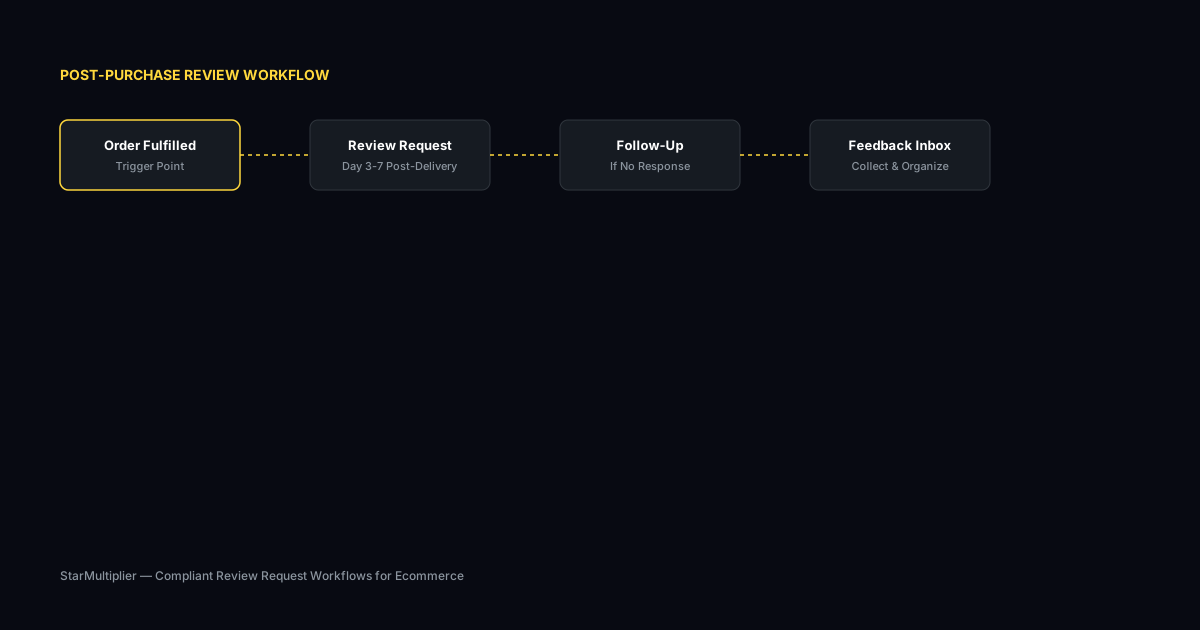
Design your review workflow as a repeatable process that can be adapted for different client needs. The workflow should include client onboarding, template setup, timing configuration, compliance review, monitoring cadence, and reporting structure. Each client implementation follows the same steps with adjustments for their specific brand voice, product catalog, and compliance requirements.
Assess your current review collection process
Start by reviewing how you currently collect reviews. Are you using automated requests, manual emails, or no structured process at all? Understanding your starting point helps you choose the right improvements.
Define your review collection goals
Set realistic targets based on your order volume. A store processing 100 orders per week might target 10-15 new reviews per week with an optimized request workflow.
Implement and iterate
Choose the right approach for your store size and implement it. Monitor response rates and adjust timing, messaging, and targeting based on performance data.
Step-by-step review workflow ecommerce agencies framework
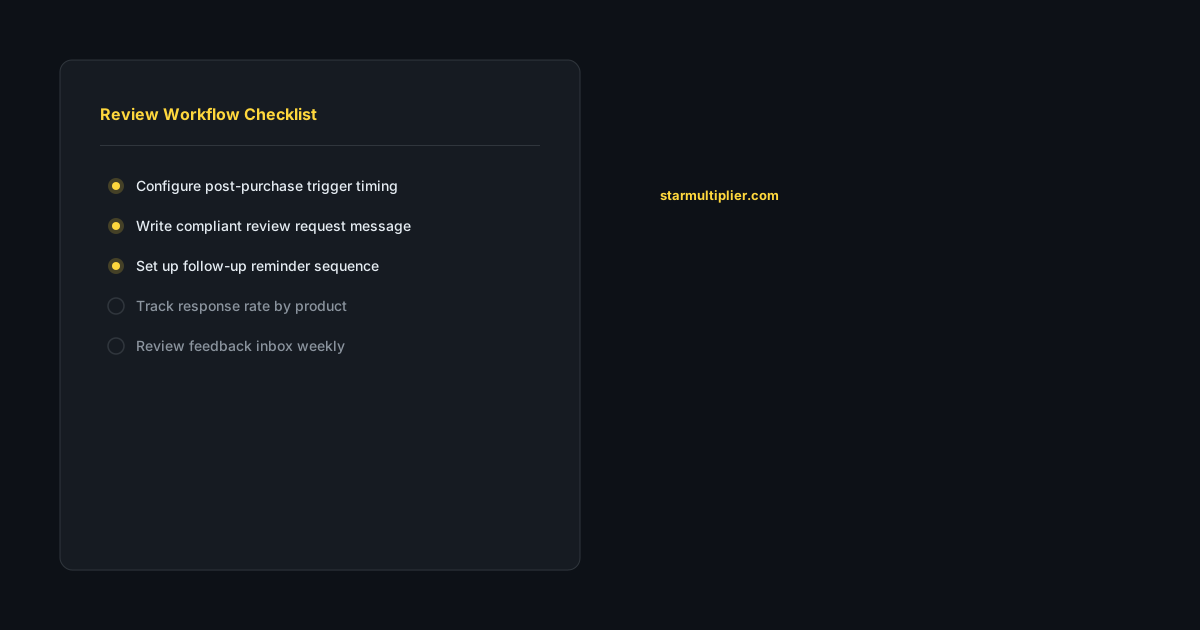
First, document your agency's ideal review workflow from initial client onboarding through ongoing management. Second, define standard configuration templates for timing rules, message templates, and compliance settings. Third, create a client onboarding checklist that ensures every account is set up consistently. Fourth, establish a monitoring cadence for reviewing client performance. Fifth, build a reporting framework that communicates results to clients in a consistent format.
Practical examples
An agency managing review collection for fifteen client stores developed a standardized workflow that reduced new client onboarding time from three days to four hours. The workflow included pre-built template sets for different industries, timing rules based on order volume, and automated monthly reporting. Clients received consistent service, and the agency could scale to more clients without adding proportional team headcount. Another agency created a tiered workflow with different levels of service based on client size, allowing them to serve both small and large clients within the same operational framework.
Example for growing stores
A mid-size store processing 300 weekly orders implemented automated review requests and saw review volume increase from 15 to 40 reviews per month within eight weeks.
Example for small stores
A boutique store with 50 weekly orders used targeted template messages for first-time buyers and repeat customers separately, improving response rates by 25 percent.
Common mistakes to avoid
One mistake is over-customizing workflows for each client, which eliminates the efficiency benefits of standardization. Build flexibility into the workflow through configurable options while maintaining a consistent underlying process. Another mistake is not documenting the workflow clearly enough for all team members to follow consistently.
Inconsistent timing
Sending requests at random intervals confuses customers and reduces response rates. Consistent timing based on delivery windows produces better results.
Generic messaging
Using the same message for every customer misses the opportunity to tailor requests by customer segment and purchase history.
review workflow ecommerce agencies checklist
Design a repeatable workflow with configurable options for different client needs. Create standard configuration templates for timing, messaging, and compliance. Develop an onboarding checklist that ensures consistent account setup. Establish a regular monitoring cadence and standard reporting format. Review your workflow quarterly to identify improvements based on client feedback and operational data.
Want to see where your review workflow is leaking opportunities? Start with a StarMultiplier review audit.
How StarMultiplier helps with review workflow ecommerce agencies
StarMultiplier supports agency review workflows with a platform that can be configured consistently across multiple client stores. Agencies set up each client with the same core workflow, adjusting templates and timing rules for each account. The platform's dashboard provides a portfolio view that helps agencies monitor all client accounts efficiently and generate consistent performance reports.
What ecommerce agencies need from a review request workflow
Ecommerce agencies managing review collection for multiple clients have fundamentally different requirements than individual store operators. An agency needs the ability to manage multiple brand accounts from a single platform without data leakage between clients. They need workflow templates that can be customized for each client's brand voice while maintaining a consistent underlying process. They need reporting that is client-presentable: performance metrics formatted clearly enough to share with clients in monthly reviews without requiring translation. They need compliance documentation that they can provide to clients as evidence that their review collection practices meet platform policies. And they need pricing models that work for agency economics: either per-client pricing that is predictable enough to build into service packages, or transparent usage-based pricing that scales with the order volume of the clients they serve. Agencies that add review operations as a service offering need technology that supports multi-client management without creating operational complexity that makes the service unprofitable. The right review workflow platform gives agencies a repeatable process they can deploy across clients efficiently while customizing the surface-level elements for each brand.
How to structure a review workflow service for ecommerce clients
Structuring a review workflow service for ecommerce clients requires defining exactly what is included in the service, who owns execution, and how performance is reported. A well-defined review workflow service for agencies typically includes initial audit and setup, ongoing management, monthly reporting, and periodic strategy review. The initial audit assesses each client's current review collection practices, identifies gaps in timing, messaging, or follow-up, and documents compliance considerations for the specific platforms the client uses. Setup involves configuring the review request platform for each client with appropriate timing rules, templates, and platform links. Ongoing management includes monitoring for technical issues, updating templates when client messaging evolves, adjusting timing rules based on performance data, and responding to any compliance changes from review platforms. Monthly reporting provides clients with key performance metrics including review volume, response rates, and trend data, along with observations about what is working and what adjustments the agency recommends. Quarterly strategy reviews address larger structural questions: are the timing rules appropriate given the client's current product mix and delivery timeline, are there new customer segments worth targeting, and are there new platforms worth including in the review collection strategy?
Compliance responsibilities for agencies managing client review workflows
Agencies that manage review collection workflows for clients bear both the operational responsibility for executing those workflows compliantly and a shared reputational risk when compliance failures occur. When an agency builds a review gating workflow for a client that results in the client's account being penalized by Google or Shopify, the agency's relationship with that client is damaged regardless of who technically made the compliance decision. Agencies should develop a clear compliance standard for review workflows that they offer as a service: what features and practices they will and will not implement for clients, even if a client requests a practice the agency believes is non-compliant. Document this standard in your agency's service agreement language so clients understand the compliance boundaries of the service from the beginning of the engagement. Review the compliance standard against current platform policies annually and update client workflows when policies change. When a client asks about features that the agency considers non-compliant, provide a clear, factual explanation of why the practice is risky and what compliant alternatives exist rather than simply refusing without context. Client education about review collection compliance is part of the value an expert agency should provide.
StarMultiplier for ecommerce agencies: a platform perspective
StarMultiplier supports ecommerce agencies managing review collection for Shopify clients through a platform that provides the workflow automation, compliance guardrails, and reporting features agencies need to deliver a consistent service without building custom infrastructure for each client. The platform's focus on compliant, authentic review collection aligns with the risk management requirements that responsible agencies need to maintain across their client portfolios. Agencies can configure StarMultiplier for each client's specific brand, product mix, and timing requirements while using the same underlying platform infrastructure. Reporting provides client-ready metrics without requiring extensive custom dashboard work. The compliance-forward platform design means agencies do not need to worry about their technology vendor introducing features that create risk for their clients. For agencies that are evaluating whether to add review operations as a service offering, StarMultiplier's pricing and feature set is designed for the growing DTC ecommerce brands that are a common agency client segment. Review the features and pricing pages to evaluate how the platform fits your agency's service model and client mix.