Review Platform Alternative for Small Ecommerce Businesses
Review Platform Alternative for Small Ecommerce Businesses — a practical guide for ecommerce stores. Learn how to build a more effective review collection process with better timing, messaging, and workflow.
Quick answer
A review platform alternative for small business focuses on essential review collection features without enterprise complexity or high price tags. Small stores benefit from platforms that offer straightforward setup, automated timing, basic analytics, and room to grow.
What is review platform alternative?
A review platform alternative for small business focuses on what smaller stores actually need: straightforward review collection without enterprise features that complicate daily use. Small ecommerce businesses typically process lower order volumes but still need professional review collection to build trust and compete with larger stores. The ideal alternative provides essential features in a package that is easy to set up and maintain.
Why review platform alternative matters for ecommerce stores
Small businesses have different review collection needs than large enterprises. A store processing 50 orders per week does not need advanced segmentation or multi-brand support. They need a tool that connects quickly to their platform, sends requests at the right time, and displays collected reviews effectively. The right alternative delivers these core features without overwhelming the store owner with unnecessary complexity.
How to approach review platform alternative
Focus on the three most important features for a small business review platform: easy setup, automated timing, and basic analytics. The setup should take under an hour and require no technical assistance. The timing system should work automatically based on order data without manual configuration. The analytics should show review volume trends and response rates at a simple dashboard level without requiring data expertise.
Assess your current review collection process
Start by reviewing how you currently collect reviews. Are you using automated requests, manual emails, or no structured process at all? Understanding your starting point helps you choose the right improvements.
Define your review collection goals
Set realistic targets based on your order volume. A store processing 100 orders per week might target 10-15 new reviews per week with an optimized request workflow.
Implement and iterate
Choose the right approach for your store size and implement it. Monitor response rates and adjust timing, messaging, and targeting based on performance data.
Step-by-step review platform alternative framework
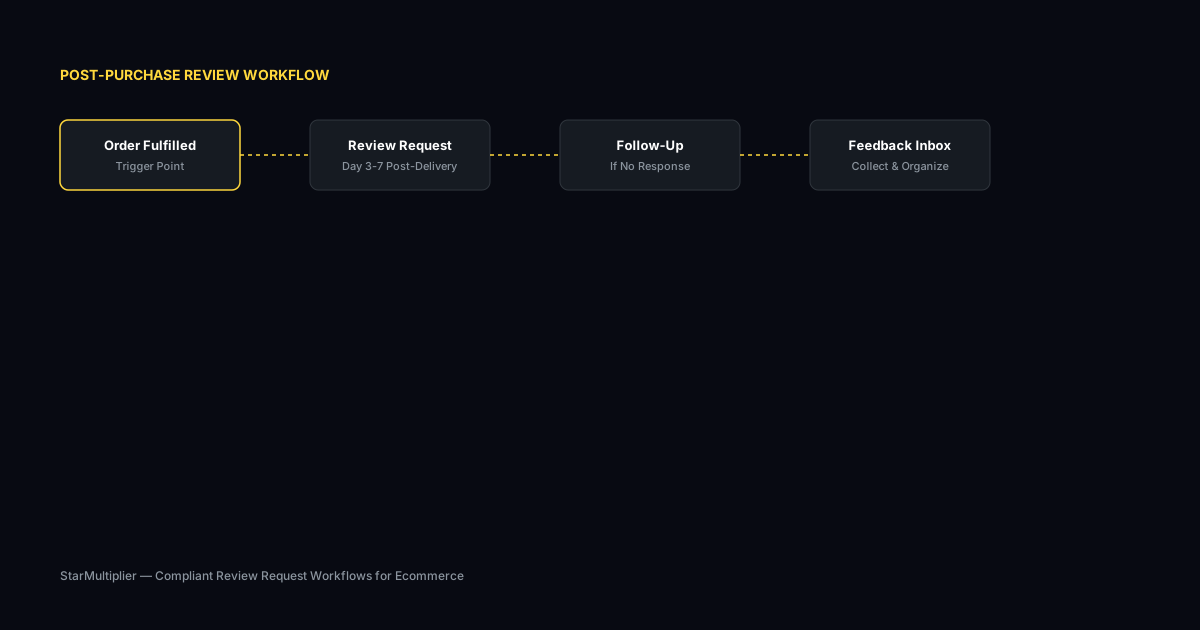
First, connect your store to the review platform and verify that orders sync correctly. Second, configure your timing preferences using the platform's default timing model, adjusting only if necessary. Third, set up your request templates using the platform's template system. Fourth, enable automated sending and monitor the first week of results. Fifth, review the analytics after two weeks and make small adjustments to timing or messaging based on initial response rate data.
Practical examples
A small boutique store processing 40 weekly orders chose a lightweight review platform over a comprehensive enterprise tool. The enterprise tool required custom configuration and a minimum monthly fee that exceeded their budget. The alternative platform connected to their Shopify store in 20 minutes, included automated timing based on fulfillment data, and provided a simple dashboard showing review counts and response rates. Another small store chose an alternative specifically because it offered pay-as-you-go pricing rather than a fixed monthly subscription.
Example for growing stores
A mid-size store processing 300 weekly orders implemented automated review requests and saw review volume increase from 15 to 40 reviews per month within eight weeks.
Example for small stores
A boutique store with 50 weekly orders used targeted template messages for first-time buyers and repeat customers separately, improving response rates by 25 percent.
Common mistakes to avoid
A common mistake for small businesses is choosing a free tool that limits essential features. Free tiers often restrict the number of requests you can send or the analytics you can access. When your store grows, you outgrow the free tier and face a disruptive migration. Another mistake is choosing an enterprise tool because of aspirational growth plans. A simpler tool that works well today is better than a complex tool that might be useful someday.
Inconsistent timing
Sending requests at random intervals confuses customers and reduces response rates. Consistent timing based on delivery windows produces better results.
Generic messaging
Using the same message for every customer misses the opportunity to tailor requests by customer segment and purchase history.
review platform alternative checklist
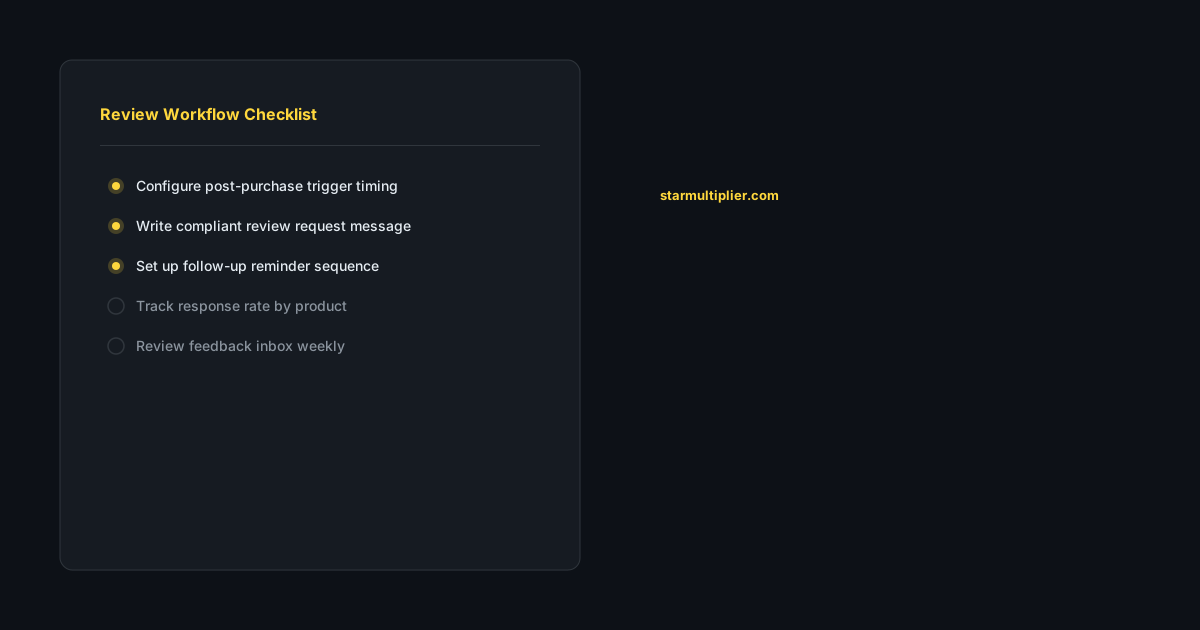
Verify that the platform connects easily to your ecommerce store without custom development. Confirm that the pricing model matches your order volume and budget. Check that the analytics dashboard shows the metrics that matter to you. Test the setup process with a trial account before committing. Read reviews from other small businesses with similar store sizes.
How StarMultiplier helps with review platform alternative
StarMultiplier is an excellent review platform alternative for small ecommerce businesses because of its straightforward setup and transparent pricing. The platform connects to Shopify and WooCommerce in under 30 minutes, includes automated timing based on fulfillment events, provides a clean analytics dashboard, and offers pricing that scales with your order volume. Small stores get professional review collection without the complexity or cost of enterprise platforms.
Want to see where your review workflow is leaking opportunities? Start with a StarMultiplier review audit.
What small ecommerce businesses need from a review platform alternative
Small ecommerce businesses evaluating review platform alternatives have specific requirements that differ meaningfully from those of larger stores. Budget is the primary practical constraint: a small business processing 100 orders per month cannot absorb the same platform costs as one processing 10,000, and alternatives that are priced for enterprise use cases offer poor value for small operators regardless of their feature quality. Setup simplicity is the second critical requirement: small business operators typically do not have dedicated technical staff, so a platform that requires custom code, complex webhook configuration, or extensive technical documentation to deploy is effectively inaccessible regardless of its capabilities. Feature scope should match actual needs rather than hypothetical future use cases: a small business that needs automated review requests, basic template customization, and monthly response rate reporting does not benefit from AI-powered sentiment analysis, advanced CRM integration, or multi-location brand management features that add cost without adding value at their scale. Finally, reliability matters more to small businesses than it does to larger ones because small businesses have less capacity to monitor for and respond to platform failures that create gaps in their review collection process.
Comparing review platform alternatives on small business criteria
Comparing review platform alternatives through a small business lens requires evaluating each option against practical criteria rather than feature counts. Time to first review request sent is a useful practical metric: how long does it take to go from account creation to sending your first automated review request with your actual Shopify order data? A platform that requires three days of configuration and technical setup creates more friction than one that can be configured in two hours. Support quality is particularly important for small business operators who encounter configuration questions without in-house technical expertise to fall back on. Evaluate support quality during the trial period by submitting questions and noting response time and answer quality. Pricing transparency is critical: some platforms show attractive base pricing but charge separately for key features, add SMS costs on top of base plans, or have significant price jumps between tiers. Calculate total cost at your current order volume and at 2x your current volume, including all features you plan to use, before making a final comparison. Compliance features should be evaluated for their practical implications: does the platform prohibit review gating by design, or does it include gating features that a small business owner might accidentally configure without understanding the compliance risk?
How to decide when a review platform alternative is worth switching to
Deciding whether a review platform alternative is worth the switching cost requires honest accounting of what the switch will cost and what it will gain. The costs of switching include the time required to evaluate and select an alternative, the time to configure and test the new platform, the risk of a coverage gap during migration, and any contract penalties for ending a current subscription early. The gains depend on what specific problems the switch is intended to solve: how much is the current platform's compliance risk costing you in operational anxiety and potential future enforcement risk? How much revenue are you losing because poor segmentation or timing is producing lower response rates than a better-configured platform would achieve? How much team time is the current platform's limitations costing in manual workarounds? When the gains clearly outweigh the switching costs, the decision is straightforward. When they are roughly equal, consider whether the switch also positions you better for the next 12 to 24 months as your business grows, because a platform that fits your needs now but will not scale cleanly with your growth will require another switch in the future anyway.
Small business review platform alternatives: the real costs to compare
Comparing the real costs of review platform alternatives for small businesses requires looking beyond the listed subscription price to the total cost of ownership over 12 months. Real costs include: the subscription fee at your order volume, any per-send or per-review charges not included in the base subscription, setup time at your team's hourly rate (how long does initial configuration take?), ongoing maintenance time at your hourly rate (how much time per month does the platform require to operate and maintain?), switching costs if the platform does not work out (migration effort, potential coverage gaps during transition), and opportunity cost of features not included in your plan that require workarounds or manual processes. Calculate total cost of ownership for each alternative over 12 months using these real cost components rather than comparing only the monthly subscription fee. A platform that costs $30 per month but requires 10 hours of initial setup and 2 hours of monthly maintenance may cost more in total than one that costs $50 per month but sets up in 2 hours and requires 15 minutes of monthly maintenance.
Free versus paid review platform alternatives for small ecommerce businesses
Free review platform alternatives are available for small ecommerce businesses, but they come with limitations that make paid alternatives worth considering even for cost-constrained operators. Free options for Shopify review collection include Shopify's built-in product review system, which provides basic on-site review display but does not include automated review request functionality. Free tiers of paid platforms often limit the number of review requests per month, restrict template customization, or gate analytics features that make the platform genuinely useful. The absence of automated outreach in free tools means stores using them collect reviews only from customers who independently find and use the review form — typically 1 to 3 percent of orders compared to 5 to 15 percent for stores using automated outreach. The revenue difference between collecting reviews from 2 percent versus 10 percent of customers, through improved product page conversion, typically exceeds the cost of a paid platform within two to three months of implementation. For small businesses evaluating free versus paid alternatives, calculate whether the likely conversion improvement from better review coverage would pay for the platform subscription before defaulting to the free option based on cost alone.
How to evaluate whether you have outgrown your current review platform
Signs that a small business has outgrown its current review platform include: you regularly need features that require manual workarounds because the platform does not support them natively; your team spends disproportionate time managing review operations manually despite having a review platform in place; you lack the reporting visibility to make confident optimization decisions because the platform's analytics are too limited; your current platform's pricing has become unfavorable relative to alternatives as your order volume has grown; or the platform lacks compliance documentation that has become important to your business as you have learned more about review platform policies. If you identify two or more of these signs, evaluating alternatives is likely to identify a better-fit platform. If you identify only one sign, investigate whether a configuration change or a tier upgrade within your current platform addresses the gap before committing to a migration.