Review Operations for Growing Ecommerce Teams
Review Operations for Growing Ecommerce Teams — a practical guide for ecommerce stores. Learn how to build a more effective review collection process with better timing, messaging, and workflow.

Quick answer
Review operations for growing ecommerce teams covers the systems, roles, and processes needed to manage review collection at scale. As stores grow, structured operations ensure every customer receives timely requests and feedback gets a response.
What is review operations ecommerce?
Review operations for growing ecommerce teams covers the systems, roles, and processes needed to manage review collection at scale. As stores grow beyond a certain order volume, ad hoc review collection processes become unsustainable. Structured operations ensure every customer receives timely requests and every piece of feedback gets an appropriate response.
Why review operations ecommerce matters for ecommerce stores
Structured review operations become essential as order volume grows. A store processing 50 orders per week can manage review requests manually with some effort. The same store processing 500 orders per week needs automated systems, defined roles, and clear processes to maintain consistent review collection without overwhelming the team.
How to approach review operations ecommerce
Build your review operations around three pillars: automated request systems that handle timing and delivery, defined team roles that clarify who handles each part of the process, and performance metrics that track whether your system is working. Each pillar supports the others, and weakness in any one pillar affects the entire operation.
Assess your current review collection process
Start by reviewing how you currently collect reviews. Are you using automated requests, manual emails, or no structured process at all? Understanding your starting point helps you choose the right improvements.
Define your review collection goals
Set realistic targets based on your order volume. A store processing 100 orders per week might target 10-15 new reviews per week with an optimized request workflow.
Implement and iterate
Choose the right approach for your store size and implement it. Monitor response rates and adjust timing, messaging, and targeting based on performance data.
Step-by-step review operations ecommerce framework
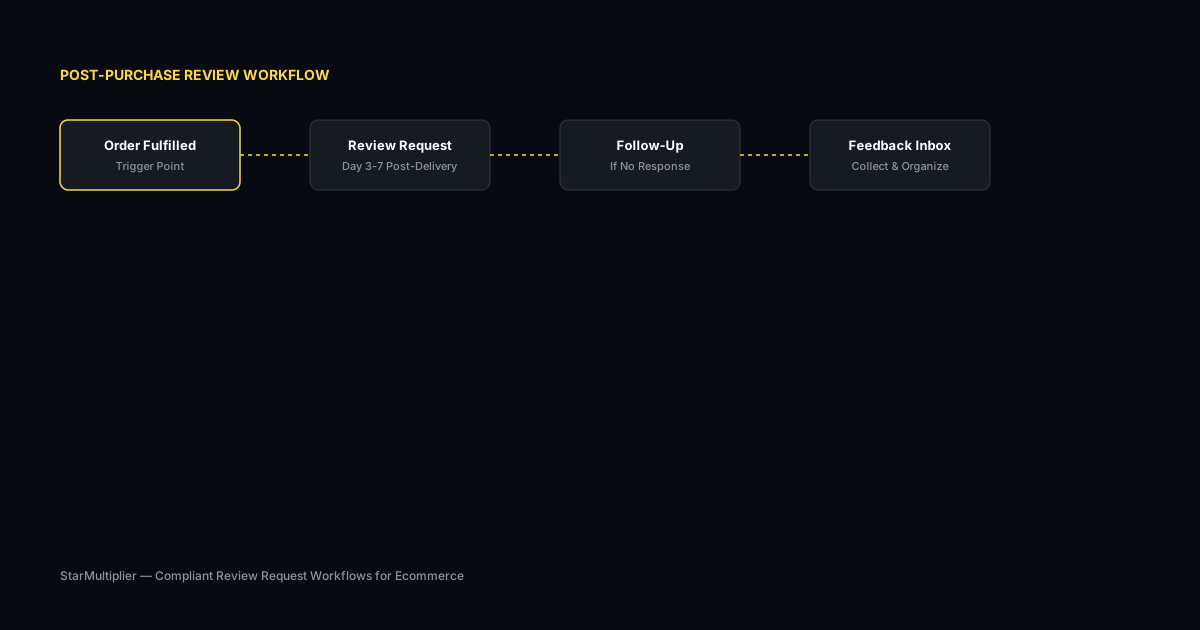
First, implement automated review requests to handle timing and delivery at scale. Second, define team roles for template management, response handling, analytics review, and strategy adjustment. Third, establish key performance indicators for review volume, response rate, and average rating. Fourth, create a regular review operations meeting to review metrics and plan adjustments. Fifth, document your operations so new team members can get up to speed quickly.
Practical examples
A growing store processing 400 weekly orders implemented automated review requests and assigned a team member to spend two hours per week on response management and analytics review. The store established targets of 50 new reviews per week and a response rate of at least 10 percent. Within two months, they were consistently meeting both targets. The structured approach also helped them identify that certain product categories had lower response rates, allowing targeted improvements. Another store created a weekly review operations dashboard that the team reviewed every Monday, making adjustments to timing and messaging based on the previous week's performance data.
Example for growing stores
A mid-size store processing 300 weekly orders implemented automated review requests and saw review volume increase from 15 to 40 reviews per month within eight weeks.
Example for small stores
A boutique store with 50 weekly orders used targeted template messages for first-time buyers and repeat customers separately, improving response rates by 25 percent.
Common mistakes to avoid
One mistake is implementing automation without defining team roles. Automation handles execution, but someone still needs to manage templates, review analytics, and adjust strategy. Another mistake is tracking too many metrics without focusing on the few that matter most. Identify three to five key metrics that directly indicate whether your review operations are healthy.
Inconsistent timing
Sending requests at random intervals confuses customers and reduces response rates. Consistent timing based on delivery windows produces better results.
Generic messaging
Using the same message for every customer misses the opportunity to tailor requests by customer segment and purchase history.
review operations ecommerce checklist
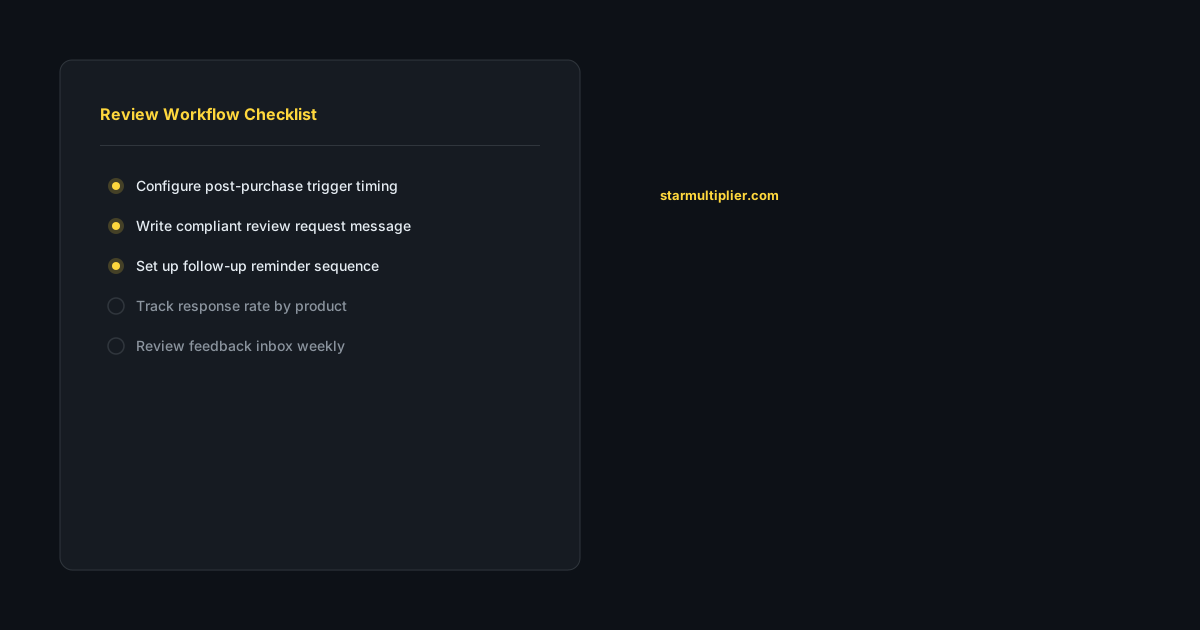
Implement automation for request timing and delivery first. Define clear team roles for each operational function. Establish three to five key performance metrics and track them weekly. Create a regular review operations meeting cadence. Document your processes so they can be replicated as your team grows.
How StarMultiplier helps with review operations ecommerce
StarMultiplier supports growing ecommerce teams with automated review request workflows that scale with order volume. The platform's analytics dashboard provides the key metrics teams need to track performance, and the central inbox makes response management efficient. Stores growing their operations find that StarMultiplier's focused feature set covers their needs without requiring additional tools or team members.
Want to see where your review workflow is leaking opportunities? Start with a StarMultiplier review audit.
What review operations means for a growing ecommerce team
Review operations is the combination of processes, tools, and team workflows that an ecommerce brand uses to systematically collect, organize, analyze, and act on product reviews and customer feedback. For a store processing 20 orders per week, review operations might mean a founder spending 20 minutes on Friday sending manual follow-up emails and reading the reviews that came in. For a store processing 2,000 orders per week, review operations requires documented workflows, automated systems, clear team ownership, and regular reporting cycles. Growing teams typically reach the point where informal review operations become insufficient when they start missing follow-up opportunities due to team capacity, when they lose visibility into review performance trends, or when they begin to notice that their review profile is not keeping pace with their order volume. The transition from informal to structured review operations does not require a large team or an expensive technology investment. It requires documenting the process, assigning clear ownership, implementing basic automation for consistent execution, and establishing a regular cadence for reviewing performance data and making improvements.
Building review operations processes that scale with your team
Scalable review operations processes share three characteristics: they are documented so any team member can execute them consistently, they use automation to handle routine tasks so team time is focused on exceptions and improvements, and they have clear metrics so performance is visible and improvement is measurable. Documentation does not need to be elaborate: a one-page process document covering who sends review requests, when, through what system, and what to do when a customer responds is sufficient for most teams. Automation handles the consistent parts of the workflow — triggering requests at the right time, managing follow-up sequences, suppressing already-reviewed customers — while team attention goes to the non-routine situations that automation cannot handle well. Clear metrics make the process visible: how many review requests are going out per week, what is the current response rate, which products have the most and least reviews, and what are the most common themes in recent customer feedback? Review these metrics in a regular team meeting, even briefly, to ensure review operations remains a visible priority rather than being treated as a background process that runs without oversight.
The team roles involved in review operations at growing ecommerce brands
As ecommerce teams grow, review operations typically involves multiple functional areas working in coordination rather than a single owner. Operations or customer service teams typically own the technical execution of review requests: ensuring the automation system is configured correctly, monitoring for technical issues, and handling operational exceptions. Marketing teams use review data to inform content strategy, identify customer language to use in product descriptions, and understand which product benefits resonate most strongly with customers. Product teams use review content to identify improvement opportunities, prioritize feature or quality changes, and track whether product improvements have affected customer satisfaction over time. Customer service teams use review response rate data to identify products generating high concern volumes and use feedback inbox data to catch service issues before they become public negative reviews. Define ownership for each of these functions rather than assuming someone is responsible. When no one owns review operations explicitly, the process degrades over time because it competes with more visible priorities for attention.
Review operations tools and technology for growing ecommerce teams
Growing ecommerce teams need review operations technology that matches their current scale and can grow with them rather than requiring a platform replacement at each order volume milestone. For teams processing under 500 orders per week, a dedicated review request tool with basic automation, template management, and response tracking is typically sufficient. The tool should handle review requests, follow-up sequences, and basic analytics without requiring technical configuration beyond initial setup. For teams processing 500 to 2,000 orders per week, more sophisticated segmentation, multi-product template management, and integration with customer data platforms becomes important. At this scale, the review operations team needs to distinguish between different customer segments, manage templates for many product categories, and have reporting that breaks down performance by segment and product. Beyond 2,000 orders per week, review operations typically integrates with CRM systems, requires API-level data access for custom reporting, and may involve dedicated tooling for specific platforms like Amazon, where review operations differs substantially from direct-to-consumer channels. StarMultiplier is positioned for growing DTC ecommerce brands processing hundreds to low thousands of orders per week, with the automation and analytics features that support professional review operations without enterprise complexity.
Building review operations handoff documentation for growing teams
As ecommerce teams grow, review operations knowledge that lives in one person's head must be transferred to written documentation that multiple team members can access and act on. Build review operations handoff documentation that covers four areas. Area one: workflow configuration reference — a complete description of every setting in your review request platform, why each setting is configured as it is, and what would change if it were modified. Area two: template library — every current template with notes on which customers receive it, when it was last updated, what the current open and click rates are, and what specific improvements are planned. Area three: monitoring and escalation procedures — what metrics to check weekly, what thresholds trigger investigation, and who to escalate to when a significant issue is identified. Area four: platform and vendor contacts — who the primary contact is at your review platform vendor, what the support process is for different types of issues, and what your account details are for billing and configuration access. This documentation ensures that review operations can continue effectively when the primary owner is unavailable and makes it possible to onboard new team members to review operations responsibility without starting from scratch.
Review operations maturity model for ecommerce teams
Ecommerce teams move through a predictable maturity progression in review operations as their business and team grow. Level one — no systematic review collection: reviews arrive passively from customers who independently find and use the review form. This is the starting point for most new ecommerce brands. Level two — manual outreach: a team member manually sends review request emails to recent customers on a weekly or monthly schedule. This level produces more reviews than passive collection but is limited by team capacity and consistency. Level three — basic automation: a review request platform sends automated review requests triggered by order fulfillment events. This level removes the manual burden and produces consistent outreach regardless of team capacity. Level four — optimized automation: the automated workflow is segmented by customer type and product category, includes an optimized follow-up sequence, and is monitored monthly with iterative improvements based on performance data. This level produces meaningfully better results than basic automation through intentional optimization. Level five — strategic review operations: review collection is connected to product development, marketing, and customer service through systematic feedback analysis, review content is repurposed across marketing channels, and compliance is monitored proactively against evolving platform policies. Most growing ecommerce brands should aspire to reach level four within 12 months of beginning systematic review collection, with level five as a medium-term objective as team capacity and data volume support it.
How review operations responsibilities should evolve as your team grows
As an ecommerce team grows from one person to five to twenty, review operations responsibilities should evolve from a single person doing everything to a distributed model with clear ownership, specialized functions, and documented processes. In a one to three person team, review operations ownership typically sits with the founder or the marketing lead who manages all customer-facing communications. The primary job is to keep the automated workflow running and to review the monthly performance report. In a five to ten person team, review operations becomes a defined responsibility within a marketing or customer experience role, with documented handoff procedures so the function can be covered during absences and clear escalation paths for compliance or performance issues. In a team of twenty or more, review operations may involve coordination between multiple functions: a marketing operations specialist who manages the platform configuration and reporting, a content specialist who maintains and improves templates, a customer experience lead who manages the direct feedback inbox, and a compliance reviewer who conducts quarterly audits. Building clear ownership documentation at each growth stage prevents review operations from becoming orphaned during team transitions that are otherwise unrelated to the review function.