Compliant Review Generation: How to Collect Reviews the Right Way
compliant review generation — a complete guide for ecommerce stores. Learn how to evaluate tools, use effective templates, and build a compliant review collection workflow that drives authentic customer feedback.
Quick answer
compliant review generation focuses on building a review collection process that follows platform policies while still effectively gathering authentic customer feedback. Compliance-first approaches protect your store from review removal, listing suppression, and account penalties.
What is compliant review generation?
Compliant Review Generation: How to Collect Reviews the Right Way starts with understanding what your store actually needs from a review collection process. Whether you are evaluating dedicated platforms, comparing approaches, or building a workflow from scratch, the goal is the same: collect authentic customer feedback efficiently and compliantly.
Why compliant review generation matters for ecommerce stores
For ecommerce stores, compliant review generation matters because product reviews directly influence purchase decisions. Shoppers trust peer feedback more than brand messaging, and stores with solid review volumes see higher conversion rates, better customer retention, and stronger organic search presence.
How to approach compliant review generation
Building an effective compliant review generation strategy starts with defining your review collection goals. How many reviews do you need per product? What response rate are you targeting? Which customer segments are most likely to leave detailed feedback? Once you have clear targets, you can evaluate which approach fits best.
Assess your current review collection process
Start by reviewing how you currently collect reviews. Are you using manual emails, a basic Shopify app, or no structured process at all? Understanding your starting point helps you choose the right next step.
Define your review volume targets
Set realistic targets based on your order volume and current review rates. A store processing 100 orders per week might target 10-15 new reviews per week with an optimized request workflow.
Choose your approach and implement
Based on your assessment and targets, choose between manual templates, a dedicated review request tool, or an integrated platform like StarMultiplier. Implement your chosen approach and monitor results.
Step-by-step compliant review generation workflow
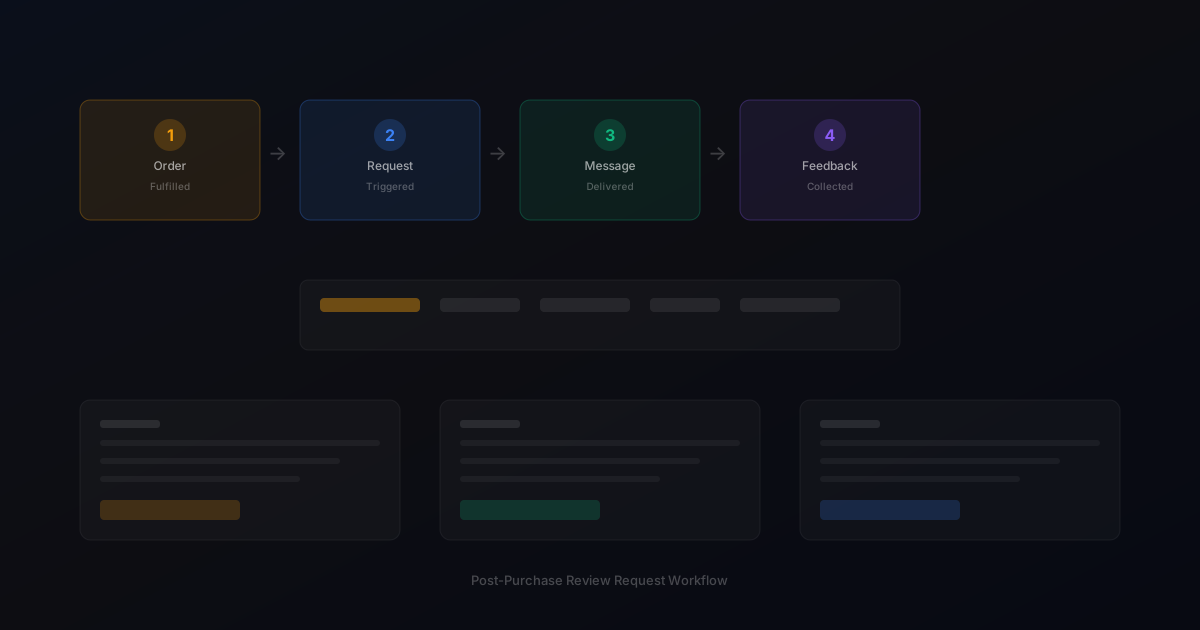
1. Connect your ecommerce platform to your review request tool. This enables automatic trigger based on order status. 2. Set timing rules for when requests go out after delivery confirmation. 3. Write request templates that match your brand voice for different customer segments. 4. Configure follow-up timing for customers who do not respond to the first request. 5. Monitor response rates and adjust timing and messaging based on performance data. 6. Connect your feedback inbox so responses route to the right team members.
Real-world examples of compliant review generation
Consider a store that sells home goods and processes 200 orders per week. With a manual email workflow, someone on the team needs to export orders daily, write personalized messages, and track responses in a spreadsheet. With compliant review generation, the store sets up automated triggers that send review requests three days after delivery confirmation and track all responses in a central dashboard.
Small store example
A boutique store with 50 orders per week implemented automated review requests and saw review volume increase from 5 to 18 reviews per month within six weeks.
Growing store example
A mid-size Shopify store processing 500 orders weekly reduced manual follow-up time by 12 hours per week after switching from manual emails to an automated review request workflow.
Common mistakes with compliant review generation
One common mistake with compliant review generation is sending review requests too early, before the customer has had a reasonable chance to use the product. This leads to low response rates and feedback that lacks useful detail about the product experience.
Inconsistent timing
Sending requests at random intervals confuses customers and reduces response rates. Consistent timing based on delivery confirmation produces better results.
Generic messaging
Using the same message for every customer ignores the different relationships first-time, repeat, and high-value customers have with your brand.
compliant review generation checklist
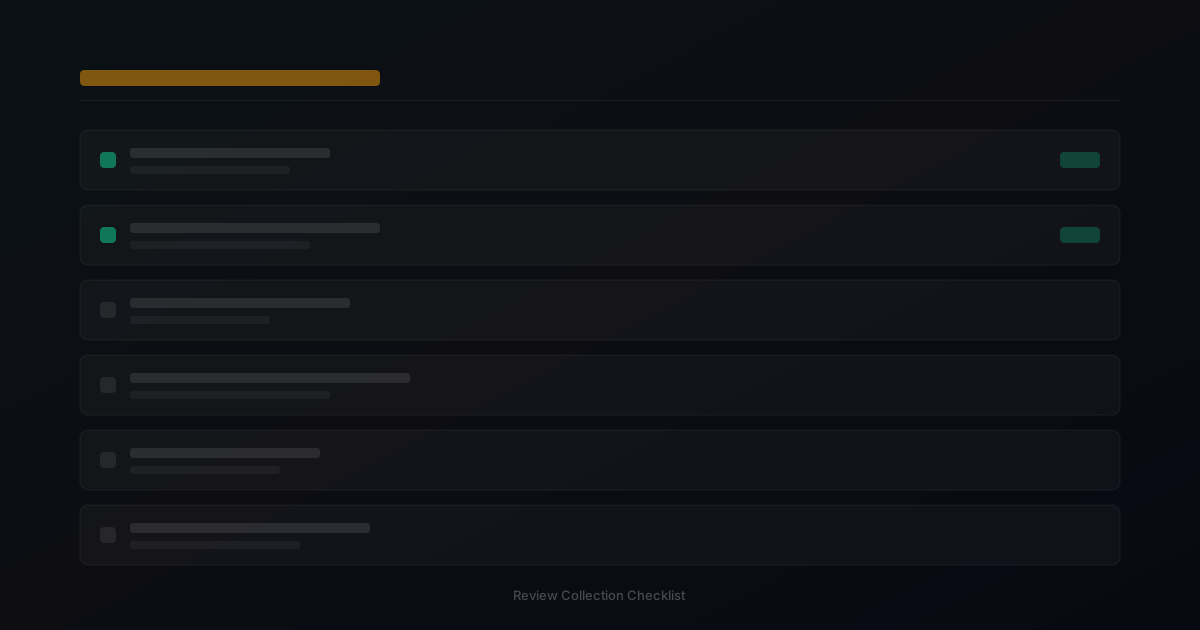
Define your target review volume per product category. Choose your review request timing based on delivery confirmation windows. Write segment-specific request templates for different customer types. Set up automated triggers connected to your ecommerce platform. Configure a single follow-up reminder for non-responders. Connect your feedback inbox for team response workflows. Monitor response rates and adjust timing based on data. Review platform compliance policies quarterly.
Want to see where your review workflow needs more policy awareness? Start with a StarMultiplier review audit.
How StarMultiplier helps with compliant review generation
Compliant Review Generation: How to Collect Reviews the Right Way is where StarMultiplier fits naturally. The platform connects to your Shopify store, automates review request timing based on order fulfillment, and provides pre-built templates for different customer segments. Your team can monitor response rates, manage feedback, and adjust messaging from a single dashboard without technical setup or ongoing manual work.
Automated post-purchase review requests
StarMultiplier connects to your Shopify store and automatically triggers review requests after order fulfillment, with timing you control.
Segment-specific templates
Use different messaging for first-time buyers, repeat customers, and high-value orders to improve response rates across segments.
Feedback dashboard and analytics
Monitor response rates, review volume trends, and customer sentiment from a central dashboard without manual data collection.
What compliant review generation means and why the distinction matters
Compliant review generation describes the practice of collecting more authentic product reviews through workflows and processes that meet all relevant platform policies and regulatory requirements. The term distinguishes legitimate review collection from non-compliant tactics like review gating, fake reviews, and selective solicitation that produce higher review counts or better ratings through manipulation rather than through genuine customer engagement. For ecommerce brands, the distinction matters because the two approaches produce fundamentally different outcomes over time. Compliant review generation builds a review profile that accurately represents the customer experience, grows sustainably with your customer base, and remains intact through platform policy enforcement actions. Non-compliant tactics produce a review profile that misrepresents the customer experience, grows artificially through manipulation, and is vulnerable to sudden collapse when enforcement actions remove manipulated reviews or penalize the account. The short-term appeal of non-compliant tactics is higher review counts and better average ratings achieved faster than compliant collection would produce. The long-term cost is brand reputation risk, platform risk, and the operational burden of maintaining manipulative workflows against increasingly sophisticated platform detection.
The mechanics of a compliant review generation workflow
A compliant review generation workflow has several defining characteristics that distinguish it from non-compliant alternatives. Universal solicitation within defined segments: all customers within a product category or customer type segment receive review requests, not just customers predicted to leave positive feedback. Timing based on fulfillment and delivery events rather than satisfaction signals: the review request fires at a defined interval after order fulfillment or delivery, not after a customer indicates they are satisfied. Honest invitation language that does not imply only positive responses are welcome: the request asks for the customer's honest experience rather than suggesting they share only if they loved the product. Single follow-up maximum for non-responders: the workflow sends one reminder to customers who did not respond to the initial request, then stops rather than continuing to contact customers who have clearly decided not to review. Immediate suppression for customers who opt out of review requests or indicate they do not want to be contacted about reviews. No satisfaction pre-screening before directing customers to a review platform: all customers who receive a review request are directed to the same review platform link rather than being routed to different destinations based on their reported satisfaction level.
Measuring the results of a compliant review generation approach
Measuring the results of a compliant review generation approach requires accepting that the metrics will look different from those produced by non-compliant tactics in the short term and better in the long term. A compliant workflow will produce average ratings that include the full distribution of customer experiences rather than only the positive end of that distribution. If your product has genuine quality issues, those issues will appear in the average rating. This is not a failure of the compliant approach — it is the accurate signal that the compliant approach is designed to provide, and acting on that signal to improve the product will produce better long-term results than hiding the signal through gating or manipulation. Response rate is the primary performance metric for a compliant review generation workflow: what percentage of customers who receive a review request complete a review. A strong compliant workflow typically achieves response rates of 5 to 15 percent depending on product category, customer relationship strength, and timing quality. Review quality, measured by average review length and specificity, indicates whether customers are providing detailed, useful feedback or brief, uninformative responses. Track these metrics monthly and iterate on your workflow to improve them over time through better timing, better templates, and better segmentation — all within compliant parameters.
How compliant review generation performs against non-compliant alternatives in the long run
The performance comparison between compliant and non-compliant review generation tactics looks different over different time horizons. In the short term — 30 to 90 days — non-compliant tactics like review gating can produce higher average ratings and apparently cleaner review profiles because they filter out negative reviews from the public count. Compliant collection produces an accurate distribution that includes the full range of customer experiences. Over the medium term — 6 to 18 months — the gap between the two approaches narrows as review platforms improve their detection of gating patterns and apply corrective actions that remove manipulated reviews or penalize accounts. The apparent rating advantage of gated collection disappears when those reviews are removed. Over the long term — 2 to 5 years — compliant collection produces a durable, accurate review profile that grows sustainably with customer volume, while non-compliant tactics require ongoing effort to maintain manipulated ratings against improving platform detection. The reputational risk of a compliance enforcement action, the operational burden of maintaining non-compliant workflows, and the regulatory risk from increasing government scrutiny of fake reviews all compound over time against non-compliant approaches while compliant collection continues to grow in credibility and value.
Making the business case for compliant review generation internally
Making the business case for compliant review generation to stakeholders who might prefer faster results from non-compliant tactics requires framing the compliance choice in terms of long-term business value rather than short-term rating performance. The risk-adjusted case for compliance is clear: the expected value of a gated review profile that might be removed in an enforcement action, penalized by a platform, or subject to regulatory investigation is significantly lower than the expected value of an authentic review profile that grows steadily without compliance risk. Frame the compliance choice as insurance against a high-severity, plausible risk rather than as an abstract ethical preference. Calculate the business impact of a worst-case enforcement scenario: what would it cost the business if all reviews on your primary platform were removed because of a gating violation? What would it cost in lost conversion, brand credibility, and platform access? Compare this worst-case cost against the incremental short-term rating benefit from gating and the operational cost of maintaining a gated workflow. In most cases, the risk-adjusted calculation clearly favors compliant collection. Additionally, highlight the product intelligence benefit of honest reviews: the negative feedback that gating suppresses from public view is exactly the feedback your product team needs to make improvements that drive long-term business value.