Review Collection Tool for Shopify Stores
review collection tool for Shopify — a complete guide for ecommerce stores. Learn how to evaluate tools, use effective templates, and build a compliant review collection workflow that drives authentic customer feedback.
Quick answer
A review collection tool for Shopify helps store owners automate the process of asking customers for feedback after purchase. The best tools connect directly to your Shopify order flow, trigger requests at the right moment, and track which messages drive the highest response rates.
What is review collection tool for Shopify?
When ecommerce stores look for review collection tool for Shopify, they are typically trying to solve one core problem: how to get more product reviews without spending hours on manual follow-up. The answer depends on your store size, order volume, and technical resources.
Why review collection tool for Shopify matters for ecommerce stores
Review Collection Tool for Shopify Stores addresses a growing need for ecommerce teams: collecting enough authentic reviews to build product page trust without dedicating excessive staff time to manual follow-up. As order volumes grow, the manual approach becomes unsustainable.
How to approach review collection tool for Shopify
The most effective review collection tool for Shopify approach combines automated timing with human-friendly messaging. Automation handles the logistics of when and how to send requests, while well-written templates ensure the message feels personal and respectful rather than transactional.
Assess your current review collection process
Start by reviewing how you currently collect reviews. Are you using manual emails, a basic Shopify app, or no structured process at all? Understanding your starting point helps you choose the right next step.
Define your review volume targets
Set realistic targets based on your order volume and current review rates. A store processing 100 orders per week might target 10-15 new reviews per week with an optimized request workflow.
Choose your approach and implement
Based on your assessment and targets, choose between manual templates, a dedicated review request tool, or an integrated platform like StarMultiplier. Implement your chosen approach and monitor results.
Step-by-step review collection tool for Shopify workflow
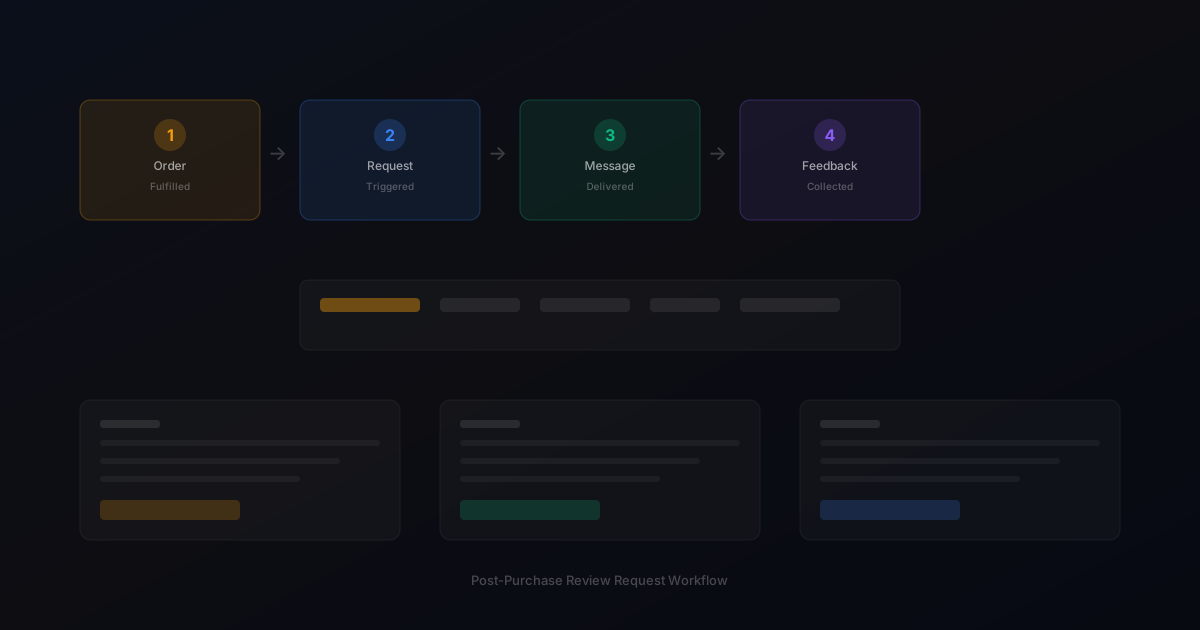
The review collection tool for Shopify workflow starts when an order is fulfilled. Your review request tool detects the fulfillment event and queues a request based on your timing rules. After the configured delay, the request is sent via the customer's preferred channel. If there is no response within your follow-up window, a single reminder is sent. All responses are tracked in your feedback dashboard for analysis and follow-up.
Real-world examples of review collection tool for Shopify
A growing apparel brand moved from sending manual post-purchase emails to using a dedicated review request workflow. Within three months, their review volume increased by 40 percent because automated timing captured customers at the right moment rather than relying on batch sends every Friday.
Small store example
A boutique store with 50 orders per week implemented automated review requests and saw review volume increase from 5 to 18 reviews per month within six weeks.
Growing store example
A mid-size Shopify store processing 500 orders weekly reduced manual follow-up time by 12 hours per week after switching from manual emails to an automated review request workflow.
Common mistakes with review collection tool for Shopify
Another frequent error is using the same review request message for every customer segment. First-time buyers, repeat customers, and high-value purchasers all have different relationships with your brand, and your messaging should reflect those differences to maximize response rates.
Inconsistent timing
Sending requests at random intervals confuses customers and reduces response rates. Consistent timing based on delivery confirmation produces better results.
Generic messaging
Using the same message for every customer ignores the different relationships first-time, repeat, and high-value customers have with your brand.
review collection tool for Shopify checklist
Audit your current review collection process for gaps. Identify which products need more reviews most urgently. Select a review request approach that fits your order volume. Set up timing rules that align with customer delivery experience. Prepare templates for different customer segments. Test your workflow with a small order batch before full rollout. Monitor response rates and iterate on messaging. Document your compliance approach for each review platform you use.
How StarMultiplier helps with review collection tool for Shopify
StarMultiplier helps ecommerce stores implement review collection tool for Shopify through automated post-purchase workflows that handle timing, delivery, and follow-up. The platform includes compliance guardrails, analytics dashboards, and template options that make it easy to launch a professional review collection process in minutes.
Automated post-purchase review requests
StarMultiplier connects to your Shopify store and automatically triggers review requests after order fulfillment, with timing you control.
Segment-specific templates
Use different messaging for first-time buyers, repeat customers, and high-value orders to improve response rates across segments.
Feedback dashboard and analytics
Monitor response rates, review volume trends, and customer sentiment from a central dashboard without manual data collection.
Want to see where your review workflow needs more policy awareness? Start with a StarMultiplier review audit.
What a Shopify review collection tool actually needs to do
A review collection tool for Shopify needs to do more than just send automated emails. The core function is timing: triggering review requests at the right moment after customers have received and had a chance to use their products. This requires integration with Shopify's fulfillment events, not just order creation events. Beyond timing, a useful tool needs to manage follow-up intelligently. Sending a second request to customers who have not responded is standard practice, but sending multiple reminders or continuing to message customers who have already left a review creates a negative experience and can damage your sender reputation. The tool needs response detection to stop follow-up sequences for customers who have already reviewed. Template management is another practical requirement. Your review request messages should reference the specific product the customer purchased rather than a generic request. This requires the tool to pull product data from Shopify and incorporate it into email or SMS templates. Finally, the tool needs to direct customers to the right review destination. Many stores collect reviews on multiple platforms: Shopify Product Reviews, Google Business Profile, and industry-specific review sites. A good tool manages links to all these destinations and lets you update them from one place.
Shopify-specific review collection challenges and how tools address them
Shopify stores face specific challenges in review collection that general tools do not always handle well. The first challenge is product variation: a store selling apparel in 12 size and color combinations might want different review request timing or messaging for different variants, and basic tools often treat all variants identically. The second challenge is international orders. Stores with customers in different countries have different typical delivery times, meaning a request sent 5 days after fulfillment might arrive before delivery in international regions. Good tools allow timing configuration by shipping method or destination country. The third challenge is subscription products. Shopify stores using subscription apps like ReCharge create recurring orders for the same products. Sending the same review request every month for the same product is redundant; a good tool should detect repeat purchases and handle them differently than first-time purchases. The fourth challenge is platform policy compliance. Shopify prohibits review gating in its terms of service, and some review collection tools include features that inadvertently or intentionally violate this policy. Always verify compliance before installing.
Integrating your review collection tool into the broader customer experience
A review collection tool should be part of a thoughtful post-purchase customer experience rather than a standalone automation. Consider how your review request timing aligns with other post-purchase communications your store sends. If a customer receives an order confirmation, shipping update, delivery notification, and then two or three additional marketing emails in the first week after purchase, adding a review request to that sequence can feel overwhelming. Think about the total number of emails a customer receives from your brand in the 7 to 14 days after purchase and place your review request at a natural moment when the customer has had time to settle into their experience with the product. Consider how you handle customers who share negative feedback through your review request process. A well-designed tool should make it easy for customers to report concerns directly, giving your team the opportunity to address issues before the customer decides whether to leave a public review. This is about providing good customer service, not about hiding negative reviews: responding quickly to concerns shows customers you care about their experience and often results in better outcomes for everyone.
How to get maximum value from your Shopify review collection tool
Getting maximum value from your Shopify review collection tool requires ongoing attention rather than a one-time setup. Review your response rate data monthly to identify which products, customer segments, and timing configurations are producing the best results. Products with low response rates may need different timing, better template copy, or a more prominent place in your product line to generate organic curiosity. Customer segments with consistently high response rates show you which types of customers are most engaged with your brand and most likely to share feedback publicly. Use that information to prioritize review collection for high-value repeat customers and new product launches where early reviews matter most for conversion. Update your templates periodically to keep them fresh. A review request email that worked well 12 months ago may feel stale to returning customers who have seen it multiple times. Review your timing rules quarterly to ensure they still align with your current shipping carriers and typical delivery windows. Finally, stay current on platform policies for the review destinations you use, as these change periodically and your collection workflow needs to remain compliant with the current rules for each platform.
Common setup mistakes with Shopify review collection tools
The most common setup mistakes with Shopify review collection tools create problems that are difficult to diagnose after the fact because the symptoms — low response rates, duplicate messages, or review requests arriving before delivery — are not clearly connected to their configuration causes. The first common mistake is using a single timing rule for all products when different product categories have dramatically different typical delivery windows. A next-day delivery product and an international shipping product should not have the same review request timing. The second mistake is not testing the integration with a real order before enabling the tool for full production volume. Demo and test modes often do not replicate the actual behavior of the live workflow. The third mistake is failing to import an existing suppression list of customers who have already reviewed or opted out, resulting in unwanted contacts to customers who clearly did not want to hear from you again about reviews. The fourth mistake is using merge fields without verifying that they populate correctly for all order types — multi-product orders, orders with custom variants, and orders from new customers who have no purchase history in the system can all cause personalization fields to fail in ways that a single test order does not reveal.
How to scale your Shopify review collection tool as your store grows
Scaling your Shopify review collection tool as your store grows requires proactive attention to the elements of the workflow that change meaning as order volume increases. Email deliverability becomes more critical at scale: a sending reputation issue that is manageable at 100 sends per day becomes a significant operational problem at 1,000 sends per day because the same spam complaint rate produces ten times as many complaints in absolute terms. Monitor bounce rates and spam complaint rates monthly and address any increases before they compound into a deliverability problem. Template performance becomes more data-rich at scale, giving you statistically significant comparisons between subject lines, timing variations, and segment-specific copy that are impossible to draw conclusions from at lower volumes. Use this richer data to make more confident optimization decisions. Segmentation complexity increases value at scale: a single template that works adequately for all customers at low volume leaves significant response rate potential on the table at higher volume where different templates for different segments can produce materially different results. Invest in segment-specific template development as your order volume grows and the improvement potential from better segmentation justifies the additional development effort.