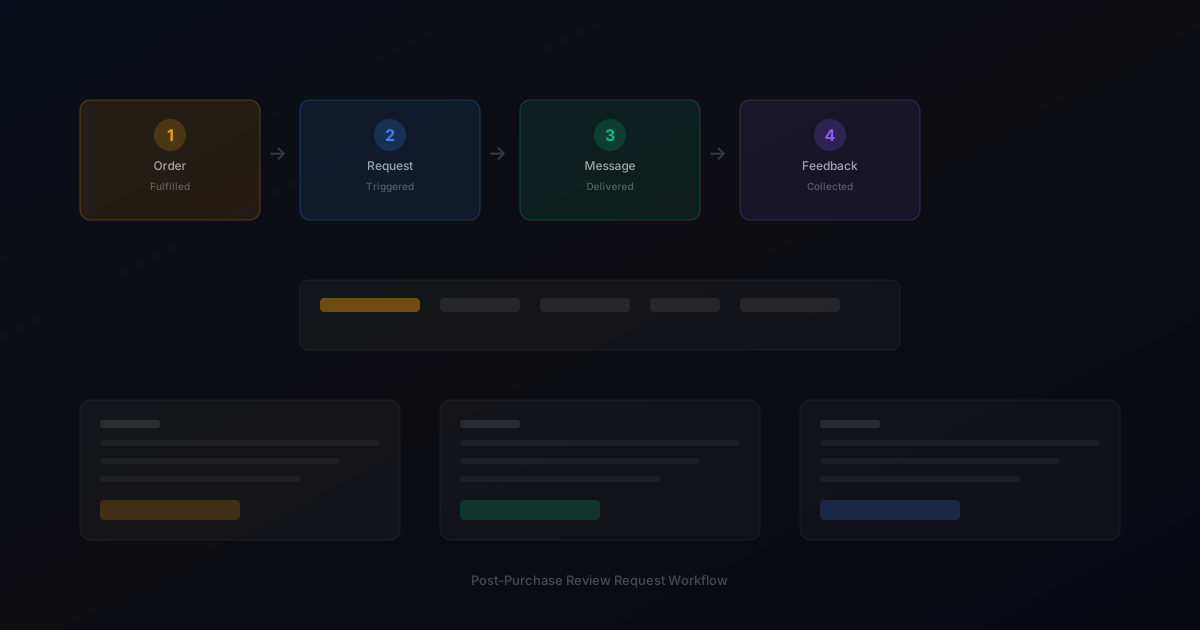
Review Analytics for Ecommerce: Metrics That Actually Matter
review analytics ecommerce — a practical guide for ecommerce stores. Learn how to build a more effective review collection process with better timing, messaging, and workflow.
Quick answer
review analytics ecommerce helps stores understand which parts of their review collection process are working and which need improvement. Tracking metrics like response rate, review volume by product, and customer sentiment over time gives teams data to optimize their workflow.
What is review analytics ecommerce?
Review Analytics for Ecommerce: Metrics That Actually Matter helps store owners understand which metrics actually drive improvements in review collection and customer feedback quality. Tracking the right data reveals what is working, what is not, and where to focus your optimization efforts.
Why review analytics ecommerce matters for ecommerce stores
review analytics ecommerce matters because you cannot improve what you do not measure. Stores that track review metrics systematically identify timing issues, messaging problems, and segment opportunities much faster than stores that rely on gut feeling about their review collection process.
How to approach review analytics ecommerce
The most important review analytics ecommerce metrics are response rate (percentage of requests that produce reviews), review volume by product, average rating trends, time-to-response after request, and follow-up effectiveness. These five metrics give you a complete picture of your review collection health.
Assess your current review collection process
Start by reviewing how you currently collect reviews. Are you using automated requests, manual emails, or no structured process at all? Understanding your starting point helps you choose the right improvements.
Define your review collection goals
Set realistic targets based on your order volume. A store processing 100 orders per week might target 10-15 new reviews per week with an optimized request workflow.
Implement and iterate
Choose the right approach for your store size and implement it. Monitor response rates and adjust timing, messaging, and targeting based on performance data.
Step-by-step review analytics ecommerce framework
1. Set up tracking for your primary metrics: response rate, review volume, average rating, and time-to-response. 2. Establish baseline values for each metric based on your current performance. 3. Identify products with below-average review coverage. 4. Adjust timing or messaging for underperforming segments. 5. Monitor metric changes after each adjustment. 6. Report key metrics to your team monthly. 7. Set targets for improvement based on your order volume and industry context.
Practical examples
A home goods store tracked their review response rate and noticed it dropped significantly during holiday months. By adjusting their request timing to account for longer delivery windows during peak seasons, they recovered their response rate within two months.
Example for growing stores
A mid-size store processing 300 weekly orders implemented automated review requests and saw review volume increase from 15 to 40 reviews per month within eight weeks.
Example for small stores
A boutique store with 50 weekly orders used targeted template messages for first-time buyers and repeat customers separately, improving response rates by 25 percent.
Common mistakes to avoid
The most common mistake is tracking too many metrics at once. Focus on 3-5 core metrics that directly measure review collection effectiveness. Another mistake is comparing your metrics to industry averages without considering your specific product type, order volume, and customer base.
Inconsistent timing
Sending requests at random intervals confuses customers and reduces response rates. Consistent timing based on delivery windows produces better results.
Generic messaging
Using the same message for every customer misses the opportunity to tailor requests by customer segment and purchase history.
review analytics ecommerce checklist
Track response rate, review volume by product, average rating, and time-to-response. Establish baselines before making changes. Adjust one variable at a time to isolate impact. Report key metrics to your team monthly. Set improvement targets based on your own data.
How StarMultiplier helps with review analytics ecommerce
StarMultiplier provides review analytics ecommerce through its dashboard, which tracks response rates, review volume, sentiment trends, and team performance metrics. The analytics help stores understand their review collection health and identify opportunities for improvement.
Want to see where your review workflow is leaking opportunities? Start with a StarMultiplier review audit.
The data every ecommerce brand should extract from their review analytics
Review analytics serve two distinct purposes in ecommerce operations: understanding and improving your review collection workflow, and extracting product and service insights from customer feedback. For workflow analytics, the essential metrics are review request volume, response rate, response rate by product category, follow-up performance, and trend data over time. These metrics tell you whether your review collection process is working effectively and where adjustments will have the most impact. For product and service analytics, review content provides a qualitative data source that complements quantitative metrics like return rates and support ticket volume. Analyzing themes across reviews — which features customers mention most often, which complaints recur, which comparisons to alternatives appear frequently — reveals insights that no survey or analytics tool can easily surface. The challenge for most ecommerce brands is that they look at review analytics reactively rather than proactively. Reviews come in, the team glances at the star rating, and occasionally someone reads through recent feedback. A more systematic approach extracts consistent insights by reviewing all feedback weekly, tagging it by issue type and product, and using the resulting data to drive specific product and service improvements.
How to use review analytics to identify your best and worst products
Review analytics provide a clear signal for identifying which products in your catalog are performing well and which need attention. Products with high review volume, strong average ratings, and specific positive feedback in review content are typically your strongest performers. Products with low review volume, declining average ratings, or repeated mentions of the same concerns in review text are candidates for improvement. For low-volume products, the first question is whether you are collecting reviews effectively: are customers receiving review requests for this product, and are they opening and clicking? If the workflow is functioning correctly but response rates are low, it may indicate that customers are less emotionally engaged with this product than with your bestsellers. For products with rating decline, read the recent reviews carefully to identify what has changed. Was there a supplier change, a packaging update, or a fulfillment partner switch that is creating problems? Review analytics often surface product quality issues faster than return rates or support volume because customers tend to share their experience through reviews sooner than they initiate formal returns or complaints. Use review data as an early warning system for product issues rather than waiting for problems to surface through operational metrics.
Setting up a review analytics reporting cadence for your ecommerce team
Review analytics are most valuable when reviewed consistently rather than sporadically. Establish a monthly review analytics report that covers key metrics including review volume by product category, response rate trends, average rating by product, and a summary of the most common themes in recent feedback. Share this report with product, marketing, and operations stakeholders rather than keeping it within a single team. Product teams can use review insights to prioritize development work. Marketing teams can use positive review themes to inform copy and highlight features that resonate with customers. Operations teams can identify recurring shipping, packaging, or fulfillment concerns that are appearing in review content. A quarterly deep-dive review supplements the monthly report by looking at longer-term trends, identifying products where review volume or quality has changed significantly, and evaluating whether your review collection workflow is producing the right results compared to industry benchmarks or your own historical performance. Annual review of your overall review strategy should include a compliance check to ensure your collection process remains aligned with the current policies of all review platforms you use.
Building a review analytics reporting cadence your team will actually use
A review analytics reporting cadence that your team will actually use requires matching the reporting frequency, format, and depth to the team's realistic capacity for consuming and acting on information. Over-engineered reporting cadences that produce weekly 20-page reports are abandoned faster than simple monthly summaries because they consume more time than they save. Design your reporting cadence in three tiers. A weekly five-minute dashboard check covers the most time-sensitive metrics: review volume for the past week, any significant rating changes on key products, and any direct feedback items requiring immediate response. A monthly 30-minute team review covers performance trends, product-level highlights, and the top three actionable insights from the previous month's feedback. A quarterly 60-minute strategic review covers longer-term trends, compliance status, platform policy updates, and strategic decisions about the review collection workflow for the coming quarter. This three-tier cadence provides the right level of attention at each time horizon without requiring the team to dedicate disproportionate time to reporting relative to the operational value it produces.
Advanced review analytics techniques for data-driven ecommerce brands
Data-driven ecommerce brands can apply more advanced review analytics techniques that go beyond basic response rate and average rating tracking to extract deeper strategic value from review data. Sentiment trend analysis tracks changes in the emotional tone of review content over time, not just the star rating. A product whose average rating is stable at 4.1 stars but whose review sentiment is shifting from enthusiastic to lukewarm is experiencing a quality or expectation problem that the stable rating does not yet reflect. Competitive mention analysis identifies when customers compare your product to specific competitors in review text, revealing which competitors your customers considered before choosing you and what attributes drove the comparison. Feature frequency analysis counts how often specific product features are mentioned in reviews, revealing which features customers notice and value versus which features your marketing emphasizes that customers do not actually mention. Return correlation analysis compares the review sentiment distribution for customers who returned their order against those who kept it, revealing whether specific product attributes or customer expectations are strongly associated with return behavior. These advanced techniques require either manual analysis of review text or text analytics tooling, but they produce insights that are not available from any other data source at the scale that review content provides.
How to use review analytics to improve product positioning
Review analytics provide insight into how customers actually describe your products — the benefits they notice, the attributes they value, and the language they use — which directly informs more effective product positioning in your marketing. When customers consistently mention a benefit you had not prominently featured in your positioning (for example, durability for a product you had positioned primarily on aesthetics), the review data is telling you to rebalance your marketing emphasis. When customers consistently mention a concern that your positioning had not addressed preemptively, review data is identifying a gap in your pre-purchase communication that could be filled with better product descriptions, FAQ content, or size/fit guidance. Extract the three to five most frequently mentioned product attributes from positive reviews each month and compare them against your current product positioning keywords and messaging hierarchy. Where the language your customers use naturally diverges from the language you are using in your marketing, consider whether your marketing language should move toward more natural customer language. This positioning refinement process, driven by real review data, is more grounded than positioning work based exclusively on competitive analysis or brand strategy frameworks.