Ecommerce Review Software Buyer's Guide
ecommerce review software — a practical guide for ecommerce stores. Learn how to build a more effective review collection process with better timing, messaging, and workflow.
Quick answer
This ecommerce review software covers the features, pricing models, and integration requirements that matter most for ecommerce stores evaluating review tools. The goal is to help buyers choose a platform that fits their order volume, team size, and compliance needs without paying for unnecessary complexity.
What is ecommerce review software?
This ecommerce review software helps store owners evaluate review software based on what actually matters for ecommerce operations. The goal is to find a platform that fits your order volume, team size, and compliance needs without paying for features you will never use.
Why ecommerce review software matters for ecommerce stores
ecommerce review software matters because choosing the wrong review platform wastes time and money and can create compliance risks if the platform supports review gating or other prohibited practices. The right platform becomes a core part of your post-purchase workflow and customer feedback system.
How to approach ecommerce review software
The best ecommerce review software evaluates platforms on five criteria: timing flexibility, multi-channel support, compliance safeguards, analytics depth, and integration ease. Each criterion should be weighted based on your specific store needs rather than a one-size-fits-all checklist.
Assess your current review collection process
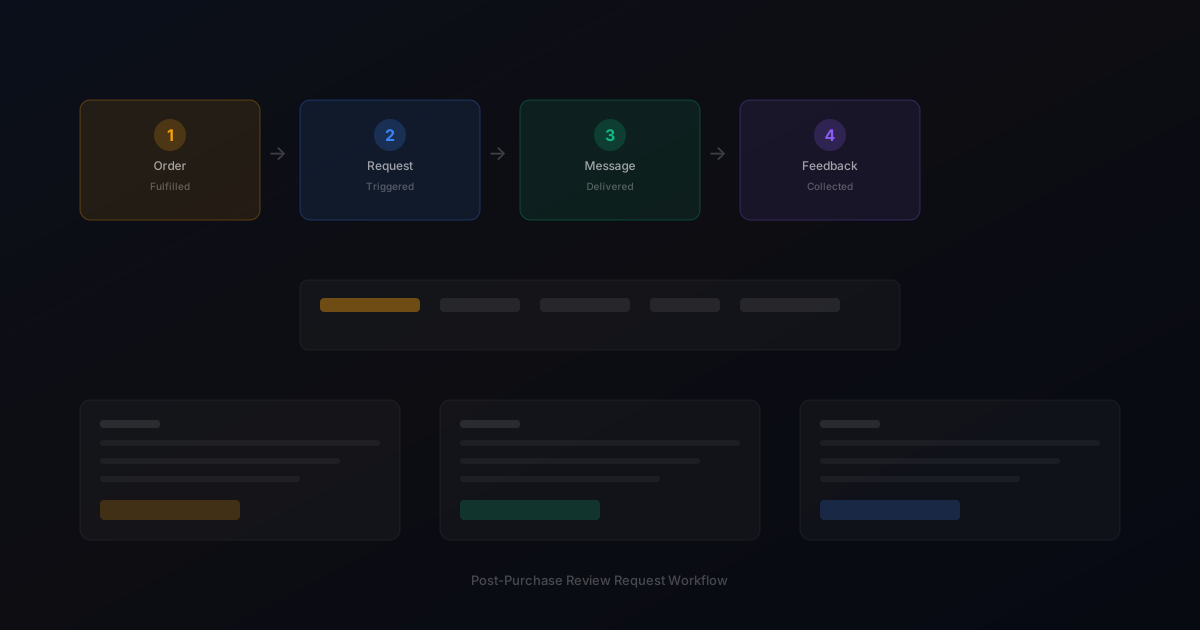
Start by reviewing how you currently collect reviews. Are you using automated requests, manual emails, or no structured process at all? Understanding your starting point helps you choose the right improvements.
Define your review collection goals
Set realistic targets based on your order volume. A store processing 100 orders per week might target 10-15 new reviews per week with an optimized request workflow.
Implement and iterate
Choose the right approach for your store size and implement it. Monitor response rates and adjust timing, messaging, and targeting based on performance data.
Step-by-step ecommerce review software framework
1. List your must-have features based on your order volume and team structure. 2. Research platforms that match your feature requirements. 3. Evaluate each platform's compliance approach and safeguards. 4. Test the integration process with your ecommerce platform. 5. Request demos or trials for the top 2-3 platforms. 6. Compare pricing models based on your projected order growth. 7. Make your selection and plan the implementation timeline.
Practical examples
A growing DTC brand evaluated five review platforms before choosing one. They narrowed the list by ruling out platforms that required long-term contracts, lacked Shopify integration, or had limited analytics. The final choice saved them 8 hours per week in manual review management.
Example for growing stores
A mid-size store processing 300 weekly orders implemented automated review requests and saw review volume increase from 15 to 40 reviews per month within eight weeks.
Example for small stores
A boutique store with 50 weekly orders used targeted template messages for first-time buyers and repeat customers separately, improving response rates by 25 percent.
Common mistakes to avoid
The most common mistake is choosing a platform based on review display features when what you actually need is better review collection. Another mistake is underestimating the importance of integration depth a platform that does not connect well with your ecommerce platform will create more work than it saves.
Inconsistent timing
Sending requests at random intervals confuses customers and reduces response rates. Consistent timing based on delivery windows produces better results.
Generic messaging
Using the same message for every customer misses the opportunity to tailor requests by customer segment and purchase history.
ecommerce review software checklist
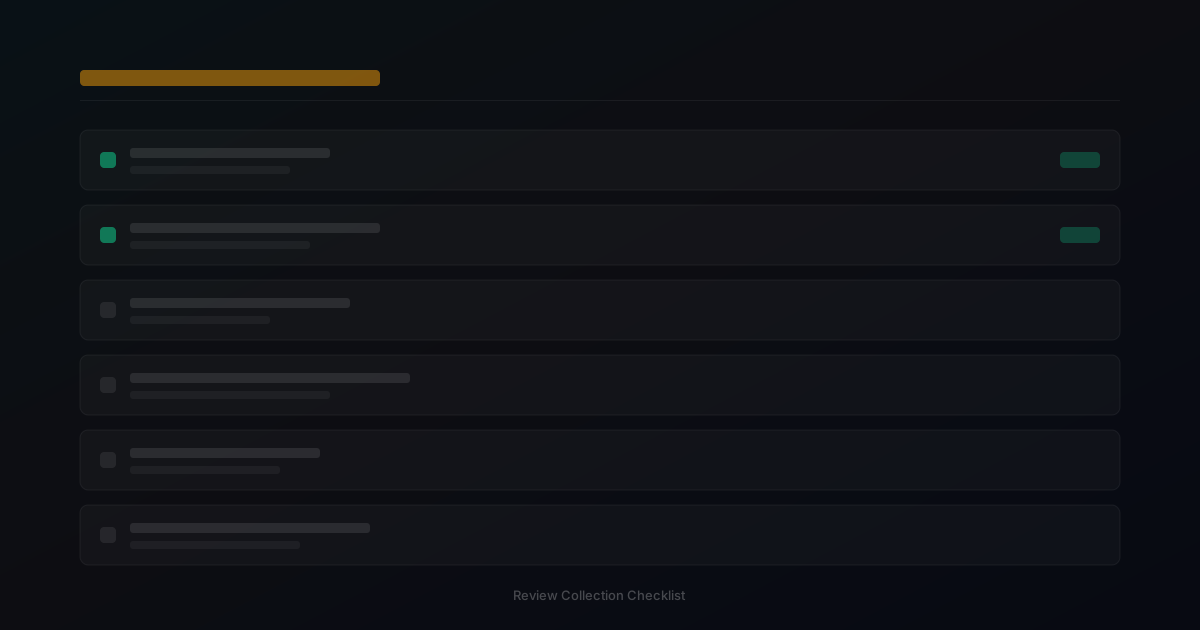
List your must-have features. Research at least three platforms. Check compliance safeguards. Test integration with your platform. Compare pricing for your projected volume. Read recent user reviews from stores similar to yours. Request a trial before committing.
How StarMultiplier helps with ecommerce review software
StarMultiplier fits the ecommerce review software for stores that need focused review request automation, customer feedback management, and review analytics without enterprise complexity. The platform integrates with Shopify, provides compliance guardrails, and scales with your order volume.
Want to see where your review workflow is leaking opportunities? Start with a StarMultiplier review audit.
What to look for in ecommerce review software: a systematic evaluation framework
Evaluating ecommerce review software systematically requires a framework that covers the features that matter most for your specific store type and growth stage. Begin by categorizing your requirements into must-haves and nice-to-haves. Must-haves are capabilities without which the software cannot serve your core workflow: for most ecommerce brands, these include direct Shopify integration, automated review request triggering based on order fulfillment, basic template customization, and response rate reporting. Nice-to-haves are capabilities that would improve your workflow but are not blocking requirements: advanced segmentation, multi-platform link management, feedback inbox, and deep analytics. This framework prevents the common mistake of choosing software based on a feature that looks impressive in a demo but that you will not actually use in production. Next, prioritize compliance posture in your evaluation. Ask every vendor specifically whether their software includes review gating features, satisfaction pre-screening, or any selective routing that could violate platform policies. A vendor that cannot clearly answer this question, or whose answer reveals that these features exist even as optional configurations, presents more compliance risk than one whose software is explicitly designed around compliant collection practices.
Comparing pricing models for ecommerce review software
Ecommerce review software uses several different pricing models, each of which has different implications for total cost as your store grows. Per-email pricing charges a fee for each review request sent, which makes costs easy to predict in the short term but can become expensive at scale: a store sending 1,000 review requests per week at $0.05 per email spends $2,600 per year on sends alone. Per-review pricing charges based on the number of reviews collected, which creates a strong alignment between cost and value but can be unpredictable and expensive if response rates improve significantly. Order-volume-based pricing charges a monthly fee based on the number of orders your store processes, regardless of how many review requests you send or reviews you collect. This model is most predictable for growing stores because cost scales linearly with business growth. Flat monthly pricing offers a fixed cost regardless of order volume or review count, which is best for high-volume stores where per-send or per-review pricing would be prohibitive. When comparing pricing models, calculate your expected cost at both your current order volume and at 2x and 5x your current volume so you understand how pricing scales with growth before committing to a platform that becomes expensive at your eventual scale.
Red flags to watch for when evaluating ecommerce review software
Several red flags in the ecommerce review software evaluation process indicate a vendor whose product or practices should be approached carefully. The first red flag is claims about guaranteed review volume or guaranteed rating improvement. No software can guarantee how many customers will leave reviews or what rating they will give, because these outcomes depend on customer behavior that software can influence but not control. Vendors who make these claims are overpromising in ways that indicate either a poor understanding of their own product or a willingness to mislead buyers. The second red flag is vague or evasive answers to compliance questions. A reputable vendor should be able to clearly explain whether their software includes review gating features and how their platform handles platform policy requirements. Evasive answers to these questions suggest the vendor either does not prioritize compliance or is unwilling to acknowledge compliance risks in their product. The third red flag is a lack of response time data or case studies from stores similar in size and product type to yours. Vendors with strong products have real customer success stories that they can share with appropriate detail. The absence of relevant case studies may indicate that the platform has not been validated in your specific use case.
The ecommerce review software buyers guide checklist
Before selecting ecommerce review software, complete this buyers guide checklist to ensure you have evaluated the most critical dimensions. Define your requirements: have you documented your specific use case requirements rather than defaulting to the vendor's feature list as your evaluation framework? Compliance verification: have you asked each vendor in writing whether their software includes review gating or satisfaction pre-screening features? Integration test: have you tested the integration with your actual Shopify or WooCommerce store using real orders during a trial period rather than relying on a demo? Pricing at scale: have you calculated the total cost at both your current and 2x your current order volume to understand how pricing scales? Support evaluation: have you tested the vendor's support responsiveness by submitting a question during the trial period and timing the response? Reference check: have you spoken with at least one current customer similar to your store in size and product category? Contract review: have you read the subscription terms including cancellation policy, data portability provisions, and any minimum commitment requirements? Compliance documentation: has the vendor provided documentation of their approach to platform policy compliance that you can reference if a compliance question arises in the future?
How to evaluate ecommerce review software vendor longevity and reliability
Vendor longevity and reliability are underweighted factors in most ecommerce review software purchasing decisions, even though choosing software from a vendor that goes out of business or significantly degrades their product creates significant operational disruption. Evaluate vendor reliability through several signals. How long has the vendor been operating, and what is their track record of consistent service? For Shopify apps, the Shopify app store shows ratings and review history that reveals patterns of service quality over time. Does the vendor have transparent status communications — a public status page that shows historical uptime and current incidents? How does the vendor handle pricing changes — have they raised prices significantly for existing customers without adequate notice? What is the vendor's approach to product development — do they release regular updates and communicate a product roadmap, or is the product stagnant? What data portability does the vendor provide — can you export your review request history, customer suppression lists, and analytics data if you decide to switch platforms? A vendor that makes data portability easy is more confident in their product's ability to retain customers than one that locks data in a proprietary format that makes migration difficult.
Post-purchase questions to ask current users of ecommerce review software
Talking with current users of ecommerce review software before making a purchase decision provides ground-truth information that vendor demos and feature lists cannot. Ask current users: how long did the initial setup take, and were there any unexpected configuration challenges? How reliable is the platform's Shopify integration in practice — have you experienced any trigger failures or data synchronization issues? What does the vendor's support response look like when you have a problem that needs immediate resolution? Have there been any pricing changes since you signed up, and how were they communicated? Are there features you wish the platform had that it does not currently support? Would you choose the same platform again if you were starting over today? Have you evaluated any alternatives since signing up, and if so, what did you find? These questions surface practical, current information about the user experience that is absent from vendor marketing materials and is more reliable than aggregate review scores on third-party software comparison sites.